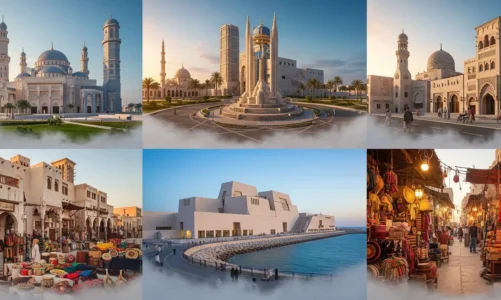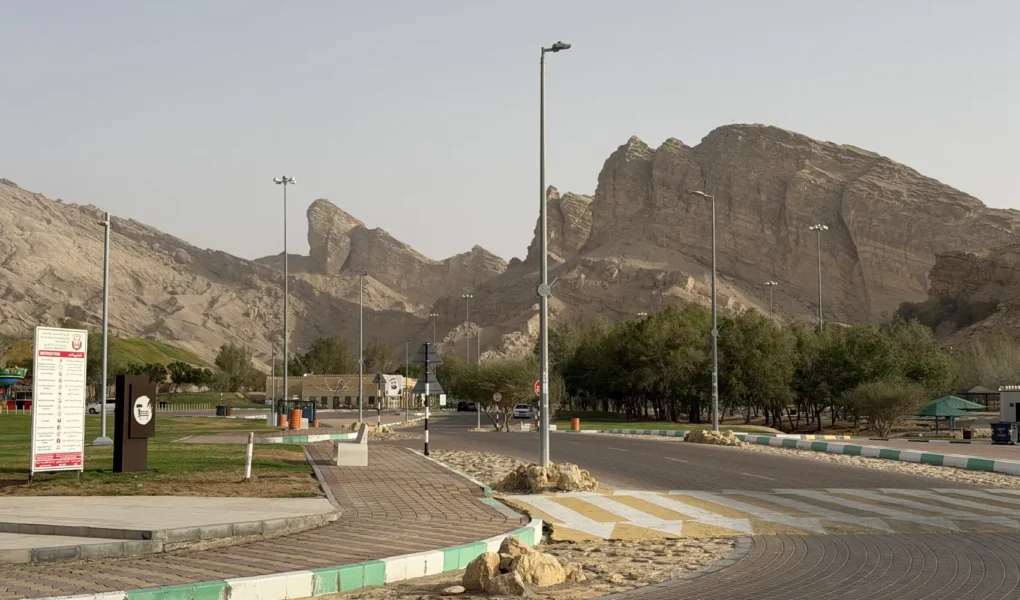
Al Ain is the UAE’s Garden City and a UNESCO World Heritage site to visit. It’s about an hour and a half’s drive from both Dubai and Abu Dhabi and was built around six ancient fields, a 3,000-year-old irrigation system that still works, and the gigantic Jebel Hafit mountain at its southern edge.
In contrast to Dubai and Abu Dhabi, almost everything interesting to see here is free. Also, the crowds are doable all year, and the history goes back 5,000 years to Bronze Age societies that traded with Mesopotamia and the Indus Valley.
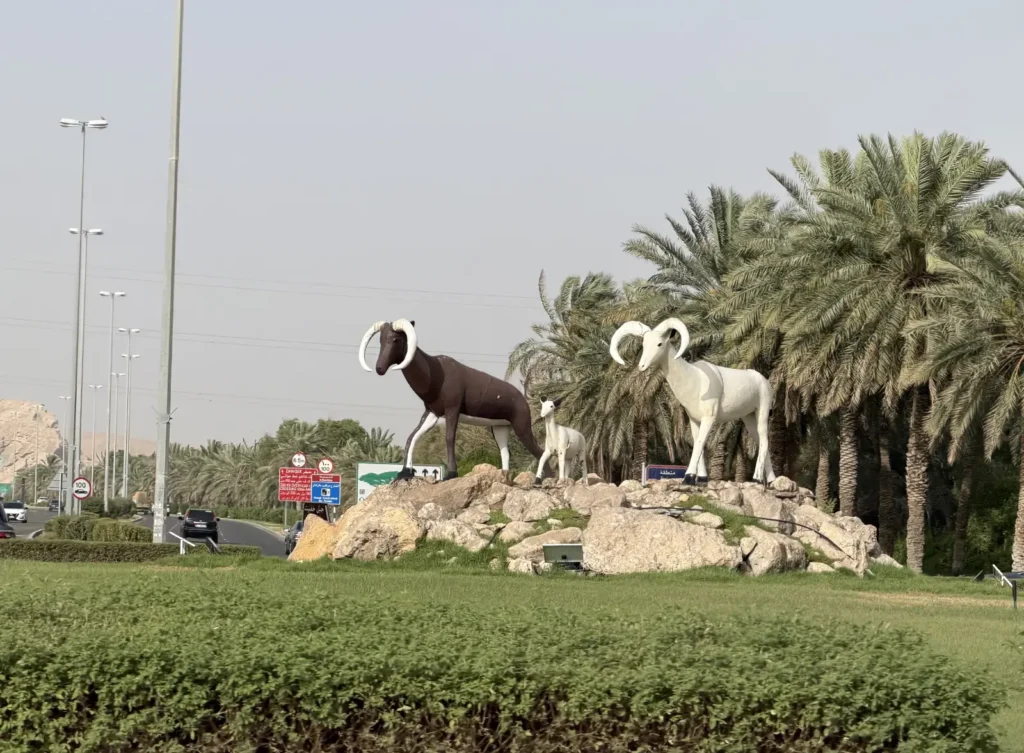
For travelers who want to experience something real, Al Ain has it all, like ancient forts that you can walk into, a camel market where real business is done before dawn, hot springs that flow from a mountain in the middle of the desert, and oases where date palms have been growing since the beginning of time. Some other things to do in Al Ain are:
- Al Ain Zoo
- Al Ain Oasis
- Green Mubazzarah
- Al Jahili Fort
- Jebel Hafit Desert Park
- Al Ain Adventure Park
- Qasr Al Muwaiji
- Hili Archaeological Park
- Al Ain Camel Market
- Al Qattara Arts Centre
Top 20 Things to Do in Al Ain
Al Ain has ancient forts you can walk into, a camel market where genuine trading happens before sunrise, hot springs flowing from a mountain, and oases where date palms have been growing since before written history.
| Attraction | Entry Fee | Rating | Time Needed |
| Al Ain Zoo | AED 28.35 adults / AED 9.45 kids | 9.5/10 | Half day (4–5 hours) |
| Al Jahili Fort | Free | 9/10 | 1–2 hours |
| Al Ain Oasis | Free | 9.5/10 | 2–3 hours (1.5 hours by bike) |
| Al Ain National Museum | AED 47.25 adults / Free kids | 8.5/10 | 2–3 hours |
| Qasr Al Muwaiji | Free | 9/10 | 1.5–2 hours |
| Al Ain Palace Museum | Free | 8.5/10 | 1–2 hours |
| Al Qattara Arts Centre | Free (classes AED 300–800) | 8/10 | 1–2 hours (half day with class) |
| Jebel Hafit Desert Park | AED 5 per person | 9/10 | Half day to full day |
| Al Ain Adventure Park | AED 175 / AED 65 Splash Pass | 9/10 | Half day to full day |
| Green Mubazzarah | Free (swimming AED 5) | 9.5/10 | Half day to overnight |
| Al Ain Equestrian, Shooting & Golf Club | Golf AED 240 / Shooting AED 21+ | 8/10 | Half day to full day |
| Souq Al Qattara | Free | 8/10 | 1.5–2 hours |
| Al Ain Camel Market | Free | 8.5/10 | 1–1.5 hours |
| Hili Archaeological Park | Free | 9/10 | 2–3 hours |
| Jebel Hafit Beehive Tombs | AED 10 (via Desert Park) | 8.5/10 | 2–3 hours |
| Al Ain Classic Car Museum | AED 15 adults / AED 5 kids | 7/10 | 30–45 minutes |
| Al Jimi Mall | Free | 7.5/10 | 1–3 hours |
| Bin Helal Fort | Free | 7/10 | 30–45 minutes |
| Al Darmaki Fort | Free | 7.5/10 | 30–45 minutes |
| Al Rumailah Fort | Free | 7/10 | 20–30 minutes |
1. Al Ain Zoo: The UAE’s Biggest Wildlife Adventure
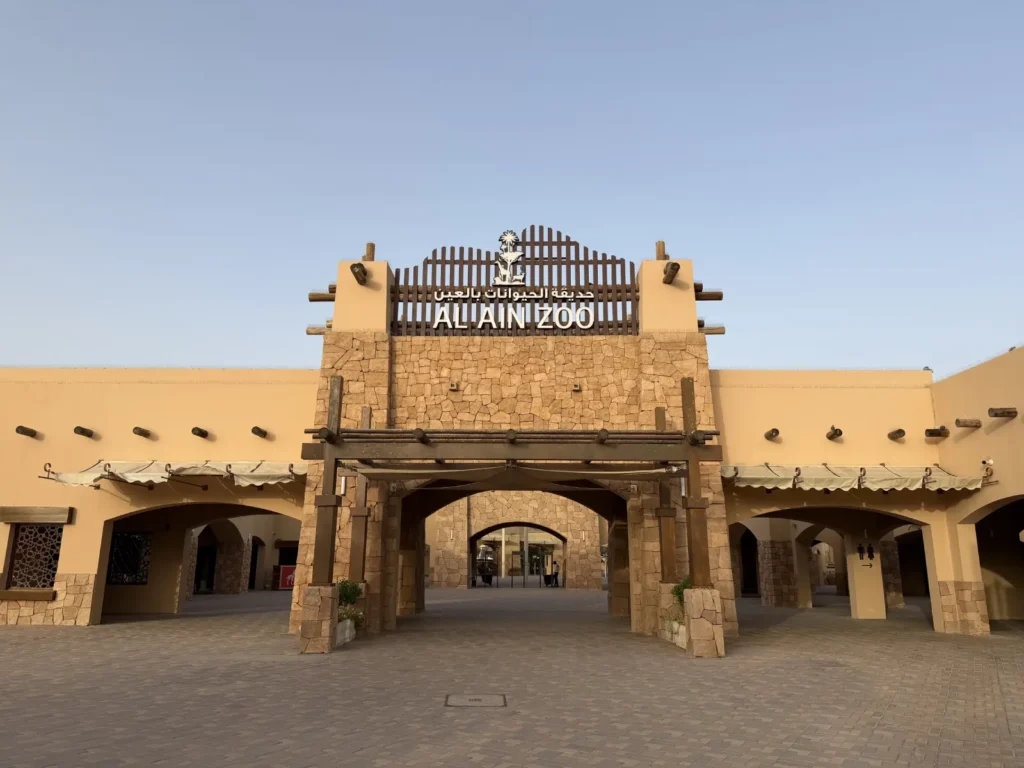
Al Ain Zoo is the largest zoo in the Middle East and alsoamong the best places to visit in Al Ain with kids. You’re not just walking past cages in Al Ain zoo, since in fact you’re moving through a 400-hectare space where African lions roam a real safari, Arabian leopards pace in open enclosures, and giraffes lower their necks to eat straight from your hand.
| 📍 Location | Nahyan First Street, Shiab Al Ashkhar, Al Ain |
| ⏱️ Time Needed | Half day (4–5 hours minimum) |
| 💰 Entry | AED 28.35 adults / AED 9.45 children (3–12) |
| 🕐 Best Time | Weekday mornings, October–April |
| 👥 Best For | Families, animal lovers, and school trips |
💡 Pro Tip: Book the Al Ain Safari SUV tour in advance; it is the best thing to do in Al Ain because it fills up fast, especially on weekends. Also, go for the weekday morning slot so the animals are active, and the savanna feels empty, not crowded.
Things Most Visitors Miss in Al Ain Zoo
- The lemur walk-through is a separate paid experience but totally worth it because you’re walking among them, not watching from outside.
- The Sheikh Zayed Desert Learning Centre inside the zoo is free with entry and has five interactive galleries.
- The Wings of the Sahara show at 6:00 PM is free and has falcons, eagles, and vultures performing live hunting shows.
- Budgie feeding in the Children’s Zoo costs only AED 10.50 and gives kids one of the most memorable 10 minutes of the whole trip.
Other Things To Do in Al Ain Zoo
- Book the Dinner with the Lions experience (AED 840/person, but reserve 48 hours ahead)
- Watch the Cheetah Run in the amphitheatre on Friday and Saturday
- Try the Penguin Encounter daily from 12:00–2:00 PM (AED 52.50)
- Ride a horse, camel, or pony through the Children’s Zoo (AED 15.75)
2. Al Jahili Fort: Al Ain’s Most Iconic Historical Landmark
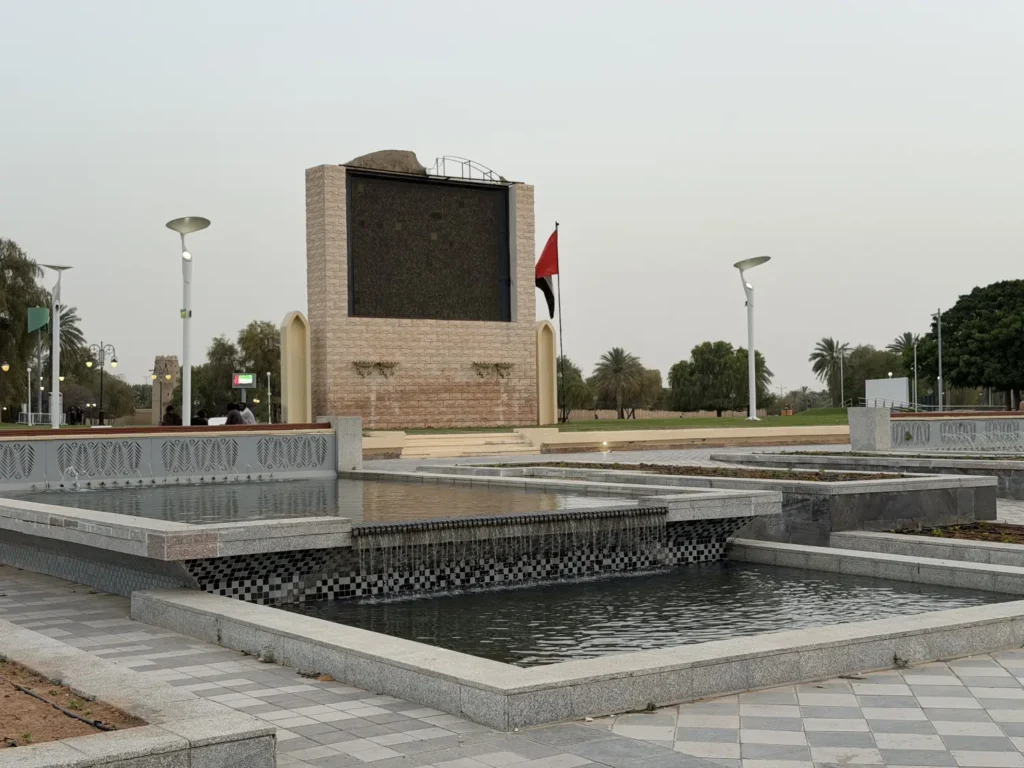
The outside of Al Jahili Fort is amazing, but the past really hits you when you go inside. Al Jahili Fort is the biggest mud-brick fort in Al Ain and was built in the 1890s by Sheikh Zayed the Great to keep clan fights in the Buraimi Oasis under control.
The watchtowers are still there, the battlements are still accessible, and there is a permanent display on Wilfred Thesiger, the British explorer who traversed the Empty Quarter and lived with the Bedouin.
Overall, Al Jahili Fort is free, the grounds are clean and have trees, and Al Jahili Park forms a green border around it.
| 📍 Location | Mohammed Bin Khalifa Al Nahyan Street, Al Jahili, Al Ain |
| ⏱️ Time Needed | 1–2 hours |
| 💰 Entry | Free |
| 🕐 Best Time | Morning or late afternoon, October–April |
| 👥 Best For | History lovers, couples, cultural tourists, everyone |
💡 Pro Tip: Park inside the Al Jahili Park lot since it’s free and gives you easy access to both the fort and the park. Moreover, try to enter through the main fort gate, not the park side entrance, or you’ll miss the visitor information centre and the Thesiger exhibition entirely.
Things Most Visitors Miss in Al Jahili Fort
- The Wilfred Thesiger exhibition in Al Jahili Fort offers rare black-and-white photos of Bedouin life from before the oil era.
- The historic mosque just outside the fort walls is easy to walk past without noticing.
- The fort won the Terra Award in 2016 for best Earthen Architecture in the world.
- The courtyard inside is used for outdoor concerts and cultural events
- The bookshop inside stocks Thesiger’s own travel writing and UAE history books that you can’t find in most bookstores
Other Things To Do in Al Ain Al Jahili Fort
- Explore all three round watchtowers and the triangular balconies along the walls.
- Visit the visitor information centre for maps and background on the fort’s military history.
- Browse the bookshop for UAE history books and Thesiger’s own writing
- Relax in Al Jahili Park, which has benches, green grass, and a children’s playground
- Check seasonal events like the Al Ain Flower Festival held in the surrounding park
3. Al Ain Oasis: A 5,000-Year-Old Living Farm in the Middle of the City
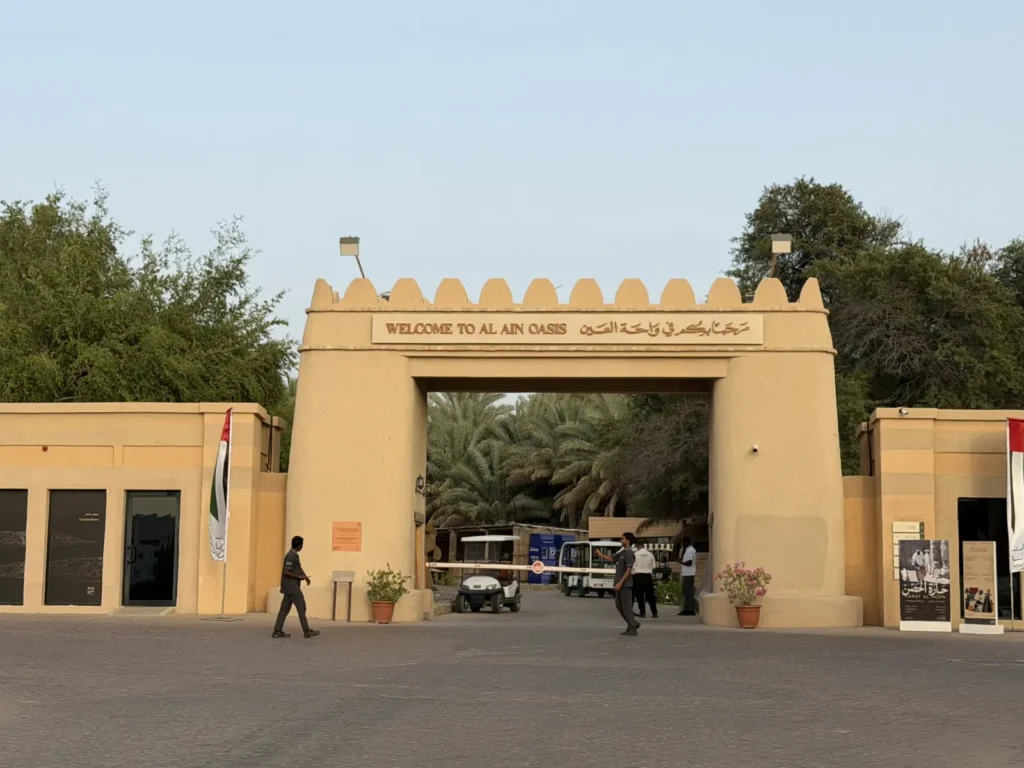
Once you walk through the gate, you can see why Al Ain Oasis is the UAE’s first UNESCO World Heritage Place to visit in Al Ain.
Al Ain Oasis is 3,000 acres of working date palm farms in the middle of a modern city, and there are 147,000 palm trees, over 100 kinds of plants, and old falaj drainage canals that still bring water from the Hajar Mountains. It’s cool inside the Al Ain Oasis too; there’s a lot of shade, and the noise of the city stops within the first 200 meters.
| 📍 Location | Hessa bint Mohammad Street, Al Mutawa’a District, Central Al Ain |
| ⏱️ Time Needed | 2–3 hours on foot, 1.5 hours by bike |
| 💰 Entry | Free |
| 🕐 Best Time | Morning, October–April |
| 👥 Best For | Couples, solo travelers, families, nature lovers |
💡 Pro Tip: Rent a bike from the West Gate (main entrance). Here, the paths are flat and wide, and the breeze through the palms makes the whole thing feel completely different from the rest of Al Ain.
Things Most Visitors Miss in Al Ain Oasis
- The Eastern Fort (Sultan Fort), built in 1910, sits on the eastern edge of the oasis and is one of the original buildings tied to the Al Nahyan ruling family.
- The Miniature Oasis is an interactive scale model of the entire oasis with working falaj demonstrations.
- The Techno Palm installations scattered through the oasis are interactive electronic information stations shaped like palm trees.
- There are mango, fig, pomegranate, banana, lemon, and olive trees mixed in alongside the date palms.
- The Eco-Centre building itself is an architectural achievement, LEED Platinum certified, and is designed to mirror the shape of connecting palm branches.
Other Things To Do in Al Ain Oasis
- Take the Oasiscape guided tour for a structured walk through the palm grove with context.
- Visit the Eco-Centre for interactive exhibits on oasis history and irrigation systems.
- Explore the Miniature Oasis for a bird’s-eye view of the entire site layout.
- Rent bikes or pedal carts from the West Gate for a faster, breezier tour
- Find the Eastern Fort on the far edge of the oasis for a quieter historical stop
4. Al Ain National Museum: The Oldest Museum in the UAE
The Al Ain National Museum opened in 1969 and is on a UNESCO World Heritage site to visit in Al Ain, right next to the Al Jahili Fort and the Al Ain Oasis. It has Bronze Age objects, a gold ornament from 2000 BCE, copper swords from 1500 BCE, and 5,000-year-old Mesopotamian pots.
As of recently, the museum underwent major upgrades that added four new halls and improved the Sultan Fort. Al Ain National Museum adult tickets cost AED 47.25, but it’s hard to say how much they weigh because of what’s inside.
| 📍 Location | Mathaf Street, next to Sultan Fort (Eastern Fort), Central Al Ain |
| ⏱️ Time Needed | 2–3 hours |
| 💰 Entry | AED 47.25 adults / Free for children |
| 🕐 Best Time | Weekday mornings, cooler months |
| 👥 Best For | History enthusiasts, adults, cultural travelers, and school groups |
💡 Pro Tip: Pair Al Ain National Museum with Al Ain Oasis and Al Jahili Fort on the same day since all three are within walking distance or a very short drive of each other. Start at the museum, walk to the oasis, and end at the fort.
Things Most Visitors Miss in Al Ain National Museum
- The Sultan Fort at the museum’s centre is one of the original buildings from the late 1800s, tied directly to the Al Nahyan ruling family.
- The archaeological remains are protected exactly where they were excavated, in situ.
- The gifts section includes a golden palm tree and silver daggers presented to Sheikh Zayed by foreign presidents.
- The Harat Al Hosn exhibition (running until September 2026) includes oral histories, personal photos, and neighbourhood maps that give Al Ain a human scale most tourists never see
- The Bedouin jewellery collection in the ethnography section has intricate silver work with context on what each piece meant socially.
Other Things To Do in Al Ain National Museum
- Seethe Ethnography section for Bedouin lifestyle displays, including jewellery, musical instruments, and a traditional majlis recreation
- Visit the Archaeology section for artifacts from Hili Gardens and Bronze Age tombs.
- Browse the Gifts gallery for diplomatic items presented to Sheikh Zayed from around the world.
- Walk the Sultan Fort grounds within the museum complex
- Combine with Al Ain Oasis next door for a full UNESCO heritage morning
5. Qasr Al Muwaiji: The Palace Where the UAE Was Actually Shaped
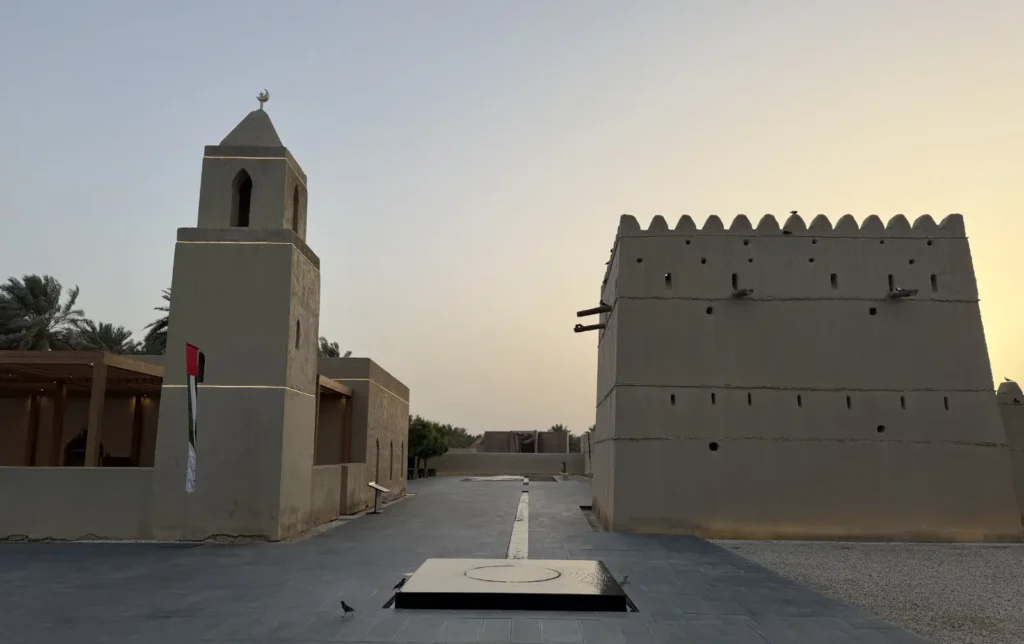
The Qasr Al Muwaiji is not a copy or recreation; it is, in fact, the real house where Sheikh Zayed bin Sultan Al Nahyan lived, ruled, and raised his family. This house is where important choices were made about groups, wealth, land, and government, and of course, these choices shaped modern Abu Dhabi.
Qasr Al Muwaiji is approximately 100 years old, is a UNESCO World Heritage Place to see in Al Ain, and you can go through the chambers, hear stories about Sheikh Khalifa’s youth, and see the courtyard where people prayed and celebrated.
| 📍 Location | Khalifa Bin Zayed The First Street, Al Muwaiji, Al Ain |
| ⏱️ Time Needed | 1.5–2 hours |
| 💰 Entry | Free (guided tours are free) |
| 🕐 Best Time | Morning, October–April. Closed Mondays |
| 👥 Best For | History lovers, adults, cultural tourists, and UAE residents |
💡 Pro Tip: Pick up the free multimedia guide at the reception desk before you start because it adds voice narration and context to each room that the signage alone doesn’t give you.
Things Most Visitors Miss in Qasr Al Muwaiji
- The original diwan rooms are where Sheikh Zayed actually held meetings and received tribal leaders.
- The Al Muwaiji Oasis sits right next to the fort with 21,000 palm trees and a working falaj system.
- The glass-walled modern exhibition hall inside the historic courtyard is itself an architectural statement.
- Archaeological excavations at the site in 2009 revealed 18th-century agricultural remains.
- The touch screen timeline board in the exhibition hall is more detailed than it looks.
Other Things To Do in Al Ain Qasr Al Muwaiji
- Take the free guided tour for context on the fort’s architectural phases and restoration history.
- Walk the outer courtyard to see the black-marble dry fountain and date palm garden.
- Visit the Al Muwaiji Oasis, immediately adjacent to the fort, where the falaj channels are still running.
- Browse the exhibition for oral narrations of Sheikh Khalifa’s childhood stories.
- Check the calendar for interactive events and cultural performances held in the courtyard seasonally.
6. Al Ain Palace Museum: Sheikh Zayed’s Actual Family Home
The Al Ain Palace Museum is where Sheikh Zayed bin Sultan Al Nahyan lived with his family from 1937 to 1966. So, here you will see the original mud-brick rooms, the original furniture, and the original blackboard in the room where his sons studied.
It sits on the western edge of Al Ain Oasis, built from clay and palm wood, and it’s designed to breathe in the desert heat the way buildings were built before air conditioning. Entry to Al Ain Palace Museum is free, and walking through it is one of the most grounded, human experiences Al Ain offers.
| 📍 Location | Hessa bint Mohammed Street, Al Jahili, next to Al Ain Oasis |
| ⏱️ Time Needed | 1–2 hours |
| 💰 Entry | Free |
| 🕐 Best Time | Morning, October–April. Closed Mondays |
| 👥 Best For | Families, cultural travelers, history enthusiasts, everyone |
💡 Pro Tip: Combine Al Ain Palace Museum with Al Ain Oasis in the same morning since the museum sits directly on the oasis edge, and walking into the palm grove immediately after the palace gives the whole visit a different texture.
Things Most Visitors Miss in Al Ain Palace Museum
- The Albarzah, the upper majlis above the main entrance, is where Sheikh Zayed received important guests.
- The room dedicated to Quranic teaching has Hadith inscriptions on the ceiling.
- The tent Sheikh Zayed used to host winter guests has been re-erected in the courtyard.
- The Land Rover in the courtyard is the same model Sheikh Zayed used for his community visits across Al Ain.
- The gifts building shows items given to the royal family by local community members over the decades.
Other Things To Do in Al Ain Palace Museum
- Walk through the family residence section on the upper floor for the personal rooms of Sheikh Zayed and his family.
- Visit the Al Nahyan family tree building for a clear genealogical overview of Abu Dhabi’s ruling family.
- Browse the gifts building for items presented by the local community over the decades.
- Explore the Albarzah upper majlis above the main entrance
- Walk directly into Al Ain Oasis from the western gate immediately adjacent to the museum
7. Al Qattara Arts Centre: A Place with 3,000-Year-Old Iron Age Ruins

Al Qattara Arts Centre is a working creative space inside a restored mudbrick fort, and its basement contains genuine Iron Age archaeological remains from 3,000 years ago. All these remains in Al Qattara Arts Centre were discovered during construction and are now displayed in situ beneath the studios where people are taking pottery classes overhead.
Al Qattara Arts Centre opened in 2011. The entry is free, and it runs a full weekly programme of painting, calligraphy, pottery, oud, and piano classes for adults and children.
| 📍 Location | 124th Street, Al Qattarah, Al Ain |
| ⏱️ Time Needed | 1–2 hours (half day if joining a class) |
| 💰 Entry | Free (classes charged separately, AED 300–800) |
| 🕐 Best Time | Afternoon, when the souq is open, is a cooler month for the outdoor area |
| 👥 Best For | Art lovers, families, couples, cultural tourists, creatives |
💡 Pro Tip: The Al Qattara Arts Centre heritage souq on the grounds only operates in winter. So if you’re visiting between October and March, time your arrival for late afternoon when the souq is open, and the outdoor café is serving Arabic coffee and dates for free.
Things Most Visitors Miss in Al Qattara Arts Centre
- The Al Qattara Archaeological Basement is a separate, dedicated exhibition of the Iron Age finds discovered during construction.
- The lion figurine from the Iron Age II period in the collection is described by archaeologists as one of the finest decorated ceramic pieces found in the UAE.
- Kids aged 6 and up can enroll in classes such as pottery, calligraphy, and art colouring.
- The Dry Studio runs music classes, including oud and piano.
- The murals by 12 Emirati artists cover sections of the exterior and interior walls.
Other Things To Do in Al Ain Al Qattara Arts Centre
- Go down to the Al Qattara Archaeological Basement to see displays from the Iron Age.
- Browse the permanent gallery featuring work by Emirati artists, including Roudha Al Shamsi and Ghanem Younes.
- Book a class in pottery, calligraphy, oil painting, oud, or piano (AED 300–800 per course)
- Visit the heritage souq in winter for traditional crafts and local artisan goods.
- Have Arabic coffee and dates at the outdoor café
8. Jebel Hafit Desert Park: A 5,000-Year-Old Bronze Age Tombs
At the base of Abu Dhabi’s tallest mountain, Jebel Hafit, is Jebel Hafit Desert Park, which covers almost 9 kilometers of protected desert scenery that was named a UNESCO World Heritage Site in 2011.
The most interesting thing about the park is the group of more than 500 Bronze Age beehive tombs that were built without mortar and are still standing in the desert exactly where they were made 5,000 years ago.
Besides the tombs, the park has camping for as little as AED 100, horseback and camel rides, hiking, mountain biking, and some of the best scenery in the UAE. Jebel Hafit Desert Park costs AED 5 for each person to enter the park.
| 📍 Location | 137th Street, Mazyad, Jebel Hafeet, Al Ain |
| ⏱️ Time Needed | Half day / Full day (overnight for camping) |
| 💰 Entry | AED 5 per person. Camping from AED 100 |
| 🕐 Best Time | Early morning or sunset, October–March |
| 👥 Best For | Families, adventure seekers, history lovers, couples, campers |
💡 Pro Tip: Download Jebel Hafit Desert Park offline maps before you enter because the phone signal is inconsistent in the deeper desert zones. If you’re planning to camp, book the serviced or luxury spots at least two weeks ahead between November and February.
Things Most Visitors Miss in Jebel Hafit Desert Park
- The beehive tombs are best seen at sunrise or golden hour.
- Fossils are visible in the limestone cliffs along some hiking routes.
- The Green Mubazzarah natural hot springs are a 5-minute drive from the park entrance.
- Arabian gazelles, desert foxes, and native birds are active in the park, especially early in the morning.
- The Jebel Hafit Mountain Road, a separate drive up the mountain, is one of the most scenic roads in the UAE with switchbacks and panoramic views of Al Ain from above.
Other Things To Do in Al Ain Jebel Hafit Desert Park
- Walk the marked trails among the Bronze Age beehive tombs
- Book overnight camping with basic (AED 100), serviced Bedouin tent (AED 500), or luxury bubble tent (AED 900)
- Try camel or horse riding (AED 30 per 15-minute ride)
- Rent bikes for cycling through the desert trails (AED 25/hour)
- Hike with a guide (AED 55/hour)
- Drive to Green Mubazzarah hot springs immediately after for a natural pool soak.
- Take the Jebel Hafit Mountain Road for panoramic city views at sunset.
9. Al Ain Adventure Park: The Middle East’s First Whitewater Rafting
Al Ain Adventure Park is the first whitewater rafting and kayaking facility in the Middle East, and it’s built at the foot of Jebel Hafit Mountain, which means the backdrop for every activity is one of the most dramatic landscapes in the UAE.
The Adventure Park runs over 1,100 metres of whitewater channels, the longest man-made whitewater course in the world, alongside a wave pool that holds waves up to 3.3 metres, an inflatable obstacle course, a surf pool with professional coaching, jacuzzi pools with Jebel Hafit views, and camel and horse rides on land.
Al Ain Adventure Park pass starts at AED 175 (AED 157 online), and activity add-ons are priced separately.
| 📍 Location | Ain Al Fayda Resort, Jebel Hafit, Al Ain |
| ⏱️ Time Needed | Half day to full day |
| 💰 Entry | Adventure Pass AED 175 / Splash Pass AED 65 (online discounts available) |
| 🕐 Best Time | October–April. Open 10:00 AM–6:00 PM daily |
| 👥 Best For | Families, groups, thrill seekers, athletes, couples |
💡 Pro Tip: Book Al Ain Adventure Park online for the automatic 10% discount. It’s a permanent offer, not a limited promotion. If you’re coming with kids who are under 1.2m, check the height restrictions before buying the full Adventure Pass; some activities require minimum heights, and the Splash Pass (AED 65) might be the smarter buy for younger children.
Things Most Visitors Miss in Al Ain Adventure Park
- The rafting schedule only opens from 12:00–2:00 PM, so visitors who arrive late morning and assume rafting is available all day miss it entirely.
- Professional athletes and Olympic kayak teams train here regularly.
- The Surf Pass is a completely separate ticket starting from AED 325 and includes private or shared wave sessions with optional coaching.
- The Oasis Pool jacuzzis have one of the best views of Jebel Hafit you can get at eye level in Al Ain.
- Ramadan timings and special events change the park’s schedule significantly.
Other Things To Do in Al Ain Adventure Park
- Whitewater raft the world’s longest man-made channels (open 12:00–2:00 PM, AED 125 add-on)
- Surfing in the wave pool offers beginners and advanced with coaching (from AED 170)
- Try kayaking on 1,100m of whitewater (AED 200 add-on)
- Paddle through rapids in inflatable duckies (included in Adventure Pass)
- Use the Aqua Island 350m² inflatable obstacle course (AED 35 add-on)
- Relax in the Oasis Pool jacuzzis with Jebel Hafit views
- Ride camels or horses on the land activity trails (AED 30/15 min)
- Eat at Azzurro (Italian) or Habib Beirut (Lebanese) on site
10. Green Mubazzarah: Al Ain’s Natural Hot Springs at the Foot of Jebel Hafit
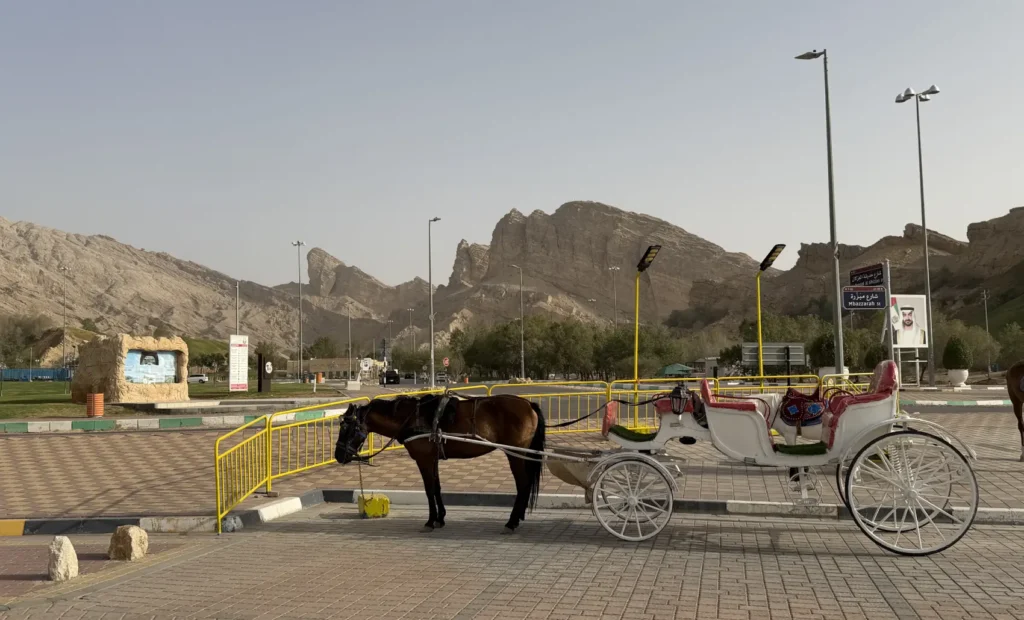
One of the most interesting places to visit in Al Ain is Green Mubazzarah. It’s a 1.6 million square meter park with real grass, a man-made lake, and natural hot springs that flow down from the hills of Jebel Hafit.
Green Mubazzarah is all free to visit. It’s not cold like you’d think a mountain spring would be, and soaking in them while watching Jebel Hafit rise orange and gray above you is an experience you can’t get anywhere else in the Emirates.
You can stay the night at Green Mubazzarah, rent a lodge, have a BBQ by the lake, ride your bike 23 kilometers to the base of the mountain, or just relax on the grass after a busy week. Green Mubazzarah costs AED to swim. 5, but you can get everything else for free.
| 📍 Location | Base of Jebel Hafit, approximately 20km south of Al Ain city centre |
| ⏱️ Time Needed | Half day minimum / Full day / Overnight camping |
| 💰 Entry | Free. Swimming AED 5. Kayaking AED 15. Train ride AED 20 adults / AED 10 kids |
| 🕐 Best Time | Early morning or late afternoon, October–April |
| 👥 Best For | Families, couples, campers, nature lovers, everyone |
💡 Pro Tip: The grass gets crowded quickly on the weekends, so bring your own mat or folding chairs. Also, there are no park seats in the park. Come during the week for the same view in a park that is almost empty. Moreover, book the cabins at least two weeks ahead of time if you want to stay overnight in the winter since they fill up quickly, and prices start at AED 485.
Things Most Visitors Miss in Green Mubazzarah
- The Al Ain cycling track starts here and runs 23 kilometres to the base of Jebel Hafit.
- The springs change temperature significantly between summer and winter.
- Fog forms at sunrise and at night around Jebel Hafit and rolls through the park in winter.
- The Green Mubazzarah Mosque inside the park is architecturally distinct and worth walking to.
- Paddleboat rentals are available on the man-made lake with a quiet, slightly ridiculous, and genuinely enjoyable way to spend 30 minutes.
Other Things To Do in Al Ain Green Mubazzarah
- Soak in the natural thermal springs (AED 5 for swimming)
- Kayak on the man-made lake (AED 15 per person)
- Take the mini train around the park (AED 20 adults / AED 10 kids)
- Cycle the 23km Al Ain cycling track from the park to Jebel Hafit’s base
- Camp overnight in designated grounds or book a chalet (from AED 485)
- Hike the gentle trails toward the slopes of Jebel Hafit from the park’s edge
- Drive the Jebel Hafit Mountain Road immediately after for panoramic city views
11. Al Ain Equestrian, Shooting & Golf Club: Horses, Shooting, Rugby, Cricket, and Climbing
The Al Ain Equestrian, Shooting & Golf Club (AESGC) is one of the most varied sports venues in the UAE.
It has an 18-hole championship golf course with a back nine that is lit up at night, 288 air-conditioned horse stables, five full-length rugby pitches, a floodlit cricket ground, an 11-meter climbing wall designed by former World Champion Speed Climbers, and four restaurants.
Al Ain Equestrian, Shooting & Golf Club started out as a 9-hole grass golf course in 2007 and has grown a lot since then. Al Ain Equestrian, Shooting & Golf Club visitors can play on the championship course for as little as AED 240.
| 📍 Location | Tawam Street, Al Maqam, Al Ain |
| ⏱️ Time Needed | Half day to full day, depending on activity |
| 💰 Entry | Golf from AED 240. Shooting from AED 21. Horse riding from AED 63/lesson |
| 🕐 Best Time | Weekday mornings for golf and equestrian. Evening for shooting and climbing |
| 👥 Best For | Sports enthusiasts, adults, couples, corporate groups, families |
💡 Pro Tip: The Back 9 of the Al Ain Equestrian, Shooting & Golf Club championship course has floodlights, which means you can play golf at sunset with Jebel Hafit in the background. Book a tee time starting around 5:00 PM in winter for the best light and temperature combination. Plus, Wednesday Sushi Nights at Palm Greens Restaurant are truly popular with regulars.
Things Most Visitors Miss in Al Ain Equestrian, Shooting & Golf Club
- The climbing wall was designed by Maksym and Anna Stienkowiak, former World Champion Speed Climbers, and includes a 10-metre World Cup speed route.
- Footgolf is available on the golf course, a hybrid of football and golf where you kick a football into oversized holes.
- The horse swimming pool is a facility most visitors don’t know exists, with its 80 metres long, which is used for equine therapy and training.
- Olympic-standard skeet and trap shooting is available at the outdoor range (AED 84–147 per 25 shots).
Other Things To Do in Al Ain Equestrian, Shooting & Golf Club
- Play 18 holes on the championship grass course (from AED 240 for visitors)
- Take horse riding lessons; pony lessons for kids from AED 63 and adult lessons from AED 105
- Try Olympic-standard shooting; air pistol from AED 21, skeet from AED 84
- Climb the 11-metre wall with Grade 4–7 routes (open Mon–Sat 2:00–10:00 PM)
- Watch or join cricket training sessions (coaching from AED 500 / 10 sessions)
- Play Footgolf on the golf course
- Dine at Palm Greens (international), Al Rikab (Lebanese), or Amblers Bar (Western)
- Watch race meetings on the 2,500-metre track.
12. Souq Al Qattara: Al Ain’s UNESCO Heritage Market
The renovated Souq Al Qattara was built in the 1930s and is located on a street lined with palm trees that used to join the Al Qattara and Al Jimi oases.
They used real building materials, not copies, to make the mud-brick walls, palm-frond roof, and ventilation systems that keep cool desert air inside. Within the 35-meter covered hallway, 10 shops are run by real artists who sell traditional clothes, pottery, falconry gear, camping gear, and other handmade items, often while showing how they’re made.
Traditional Emirati folk dances (Yola, Liwa, Harbiya), poetry readings, music, and seasonal festivities take place at the UNESCO site. Souq Al Qattara is also free to get in, and the Al Qattara Arts Center is right next door.
| 📍 Location | Hamooda Bin Ali Street, Al Qattarah, Al Ain |
| ⏱️ Time Needed | 1.5–2 hours (longer if attending a performance or class) |
| 💰 Entry | Free |
| 🕐 Best Time | Late afternoon from 4:00 PM onward, Thursday–Saturday, for the best atmosphere. October–May only |
| 👥 Best For | Cultural travelers, couples, families, photographers, everyone |
💡 Pro Tip: The Souq Al Qattara closes from noon to 4:00 PM every day, not for lack of business, but because trading in 45-degree desert heat at midday is impractical. So, plan a morning visit before 11:30 AM or an afternoon visit after 4:00 PM.
Things Most Visitors Miss in Souq Al Qattara
- The souq closes entirely during summer (June–September).
- Luqaimat, the traditional sweet dumpling served with date syrup and sesame seeds, is available at food stalls inside the souq.
- The Yola dance performance (traditional men’s dance with rifles) is scheduled rather than continuous.
- The Annual Traditional Handicrafts Festival draws artisans from across the UAE and is the single best time to visit.
- The 35-metre covered corridor’s ventilation system was designed centuries before air conditioning. In fact, the narrow width traps cool air, and the palm-frond roof filters direct sunlight.
Other Things To Do in Al Ain Souq Al Qattara
- Shop for traditional Emirati clothing, pottery, falconry gear, and handcrafted items from local artisans
- Watch live Yola, Liwa, and Harbiya traditional dance performances (check schedule at entrance)
- Try Luqaimat, Arabic coffee, dates, and traditional Emirati food from stalls inside.
- Attend art workshops at the adjacent Al Qattara Arts Centre (calligraphy, pottery, oud)
- Visit during the Annual Traditional Handicrafts Festival for the widest selection.
- Explore the Al Qattara Oasis, 2 minutes away, for a working falaj system and date palms.
13. Al Ain Camel Market: The UAE’s Only Surviving Traditional Camel Souk
The Al Ain Camel Market is the last traditional camel-selling market in the UAE. Every morning, people buy and sell camels, goats, and lambs there without any staging, tourist packages, or set prices.
Here in Al Ain, camel market traders come from Bedouin families and discuss genes, physical condition, and the possibility of winning races or beauty contests. There are big differences in the costs and motives for buying racing camels versus beauty camels.
For example, racing camels are rated on their neck form, hump symmetry, coat quality, and face traits. You can get into the Al Ain camel market for free at any time; it’s busiest from 6 AM to 9 AM.
| 📍 Location | Zayed Bin Sultan Road, behind Bawadi Mall, Al Ain |
| ⏱️ Time Needed | 1–1.5 hours |
| 💰 Entry | Free (tips may apply for photography or camel rides for kids) |
| 🕐 Best Time | 6:00 AM–9:00 AM daily. October–April for comfortable temperatures |
| 👥 Best For | Cultural travelers, families, photographers, and anyone curious about Emirati heritage |
💡 Pro Tip: Arrive in Al Ain camel market at 6:00 AM sharp, not 7:30, not 8:00. The peak negotiating activity happens in the first 90 minutes after sunrise, when traders are inspecting animals, deals are being sealed with handshakes, and baby camels are being moved between pens. So by 9:00 AM, the energy has dropped significantly.
Things Most Visitors Miss in Al Ain Camel Market
- Beauty camels are traded on completely different criteria than racing camels.
- A beauty contest camel is judged on neck curve, hump symmetry, coat sheen, and facial structure.
- The goat and sheep pens run alongside the camel area and are part of the same active trading session.
- Baby camels in the pens, some barely able to walk, are already designated for specific purposes.
- The market is busiest on Fridays and Saturdays when admission to races at the Al Dhahir camel racing track (separate location) is free at 6:00–7:00 AM.
- Islamic business practices govern every transaction here, and deals are sealed by handshake and reputation.
Other Things To Do in Al Ain Camel Market
- Watch live camel trading negotiations between Bedouin traders
- See racing and beauty camel breeds side by side, and learn the visual differences
- Ask traders (politely, through a gesture toward their animal) about bloodlines and racing history
- Take photos of camels, saddles, rope halters, and traditional equipment (ask first)
- Arrange short camel rides for children if a trader offers (tips apply)
- Combine with the Al Dhahir camel racing track on Friday/Saturday mornings.
- Drive to Al Ain Oasis or Al Jahili Fort immediately after for a full heritage morning.
14. Hili Archaeological Park: The Largest Bronze Age Site with 5,000-Year-Old Tombs
Hili Archaeological Park is the largest Bronze Age site in the UAE, dating to the third millennium BC, and that’s more than 5,000 years ago.
The centrepiece is the Hili Grand Tomb, which is a circular burial structure 12 metres in diameter and 4 metres high, with two decorated entrance reliefs showing carved human and animal figures that have survived intact since around 2000 BCE.
Hili archaeological park is a UNESCO World Heritage Site, entry is completely free, and beyond the tombs, it includes a park-based archaeological museum, reconstructed watchtowers, a Falaj irrigation system from the Iron Age, BBQ stations, a basketball court, a cafeteria, and a children’s play area.
| 📍 Location | Athar Hili Street, Al Hili, Al Ain |
| ⏱️ Time Needed | 2–3 hours (longer if using the BBQ facilities) |
| 💰 Entry | Free |
| 🕐 Best Time | Morning, November–March. Open daily |
| 👥 Best For | History lovers, families, adults, and cultural tourists |
💡 Pro Tip: The Hili Grand Tomb has two entrances with carved relief figures; one shows humans, and the other is for animals.
Things Most Visitors Miss in Hili Archaeological Park
- The 3,000-year-old fingerprints discovered at Hili II in 2019 were left by craftsmen who built a wall on this exact site.
- The Hili Grand Tomb was used across multiple periods, originally Bronze Age, then reused through the Iron Age.
- The park’s agricultural infrastructure, like wells, falaj channels, and irrigation remains, shows that Hili was a functioning farming community 5,000 years ago.
- Trade links to Mesopotamia, the Indus Valley, and Iran are proven by objects found in the tombs.
- The park is 10 kilometres from Al Ain city centre on the road toward Dubai.
Other Things To Do in Al Ain Hili Archaeological Park
- Walk the full perimeter of the Hili Grand Tomb, including both decorated entrance reliefs
- Visit the Hili Archaeological Museum inside the park for excavated artefacts and context
- Explore the Iron Age falaj irrigation channels still visible in the park
- Walk to the Hili II site, where 3,000-year-old craftsmen’s fingerprints were discovered
- Use the BBQ stations for a family picnic alongside one of the UAE’s most significant heritage sites
- Combine with Al Rumaila Fort (5 minutes) or Al Jahili Fort (17 minutes) for a full morning.
15. Jebel Hafit Beehive Tombs: Over 500 Bronze Age Tombs at the Mountain’s Base
The Jebel Hafit Beehive Tombs are a separate attraction from Jebel Hafit Desert Park. In fact, it is a concentrated necropolis of more than 500 dome-shaped stone burial chambers built between 3200 and 2500 BCE.
Each tomb in the Jebel Hafit beehive tombs is a single round or oval chamber of uncut local rock, 2–3 metres wide, with ring walls rising to 3–4 metres and sloping inward to form a dome. They were built without mortar and without cut stone and are still standing after 5,000 years.
Plus, the Jebel Hafit beehive tombs are part of the UNESCO World Heritage Site, and the entry is AED 10 per person through the Jebel Hafit Desert Park gate.
| 📍 Location | Eastern foothills of Jebel Hafit, accessed via Mazyad / Jebel Hafit Desert Park entrance |
| ⏱️ Time Needed | 2–3 hours |
| 💰 Entry | AED 10 per person (Desert Park entry fee) |
| 🕐 Best Time | Sunrise (best photos). Late afternoon is the second best. October–April only |
| 👥 Best For | History enthusiasts, photographers, couples, hikers |
💡 Pro Tip: Sunrise is the single best time to visit Jebel Hafit beehive tombs because the low-angle morning light picks up the texture and shadow of the dry-stone construction in a way that makes each tomb look dramatically different from its midday appearance. In addition, if you’re coming to Jebel Hafit beehive tombs for photography specifically, arrive 30 minutes before sunrise and plan to stay for the first hour of light.
Things Most Visitors Miss in Jebel Hafit beehive tombs
- The tombs were originally excavated and published by a Danish archaeological team in 1961
- Each tomb contained the remains of two to five people buried in a seated position with personal belongings.
- The reuse of the tombs through the Iron Age is documented by weapons dated to 2000–1000 BCE found inside a Bronze Age chamber.
- Marine fossils are visible in the limestone cliff faces along some of the hiking routes near the tombs.
Other Things To Do in Al Ain, Jebel Hafit, Beehive Tombs
- Walk the marked trail from the park entry point to the primary necropolis (Trail A, approximately 1km)
- Visit restored and unrestored tombs side by side to understand what the originals looked like before archaeological work
- Look for marine fossils embedded in the limestone cliff faces along the hiking routes
- Ask the on-site guide (Ahmed has been noted by visitors as particularly helpful) for context on specific tomb clusters
- Combine with the Green Mubazzarah hot springs immediately after
- Drive the Jebel Hafit Mountain Road from the Desert Park gate for panoramic summit views
16. Al Ain Classic Car Museum: 30 to 40 Rare Vintage Cars from the 1920s
The Al Ain classic car museum began in 2009 as a private collection of cars owned by members and their friends. At first, they were stored under a traditional Bedouin tent near the Al Ain Sportsplex.
It has since moved to a 2,000-square-meter air-conditioned building in Ain Al Fayda and grown into a curated display of 30 to 40 vintage and classic cars from around the world, some of which date back to the 1920s.
Adults pay AED 15 to get into the Al Ain classic car museum, and kids ages 5 to 15 should pay AED 5. Entry to the Al Ain classic car museum also includes guided explanations.
| 📍 Location | Ain Al Fayda, Al Ain (adjacent to Al Ain Adventure Park area) |
| ⏱️ Time Needed | 30–45 minutes |
| 💰 Entry | AED 15 adults / AED 5 children (5–15) / Free under 5 |
| 🕐 Best Time | Wednesday–Sunday. Call ahead to confirm hours before visiting |
| 👥 Best For | Car enthusiasts, couples, casual visitors, families with older kids |
💡 Pro Tip: Call +971 54 542 4283 before you go to the Al Ain classic car museum. The museum’s operating hours are Wednesday to Sunday, 10:00 AM to 6:00 PM (Friday from 4:00 PM), but unannounced closures happen.
Things Most Visitors Miss in Al Ain Classic Car Museum
- The museum started as a tent-based private collection.
- The guide included with the entry explains the history of each specific vehicle rather than general automotive history.
- Some models in the collection are not available for viewing anywhere else in the UAE.
Other Things To Do in Al Ain Classic Car Museum
- Take the guided walkthrough that is included with entry, and it is significantly better than the self-guided reading of plaques
- Ask specifically about the rarest or most unusual car in the current collection
- Combine with Al Ain Adventure Park (immediately adjacent) for a contrasting full morning
- Visit Green Mubazzarah (nearby) afterward for outdoor time after the air-conditioned museum
17. Al Jimi Mall: Has VOX Cinema and 200+ Stores
Al Jimi Mall opened in the early 1980s as Al Ain’s first shopping center. It started out as a market for fruits and vegetables, but it has since grown to 76,000 square meters.
Plus, Al Jimi Mall has more than 200 local and international stores, VOX Cinemas, several family entertainment venues, Carrefour, and an outdoor Retail Park that recently opened with furniture stores and new places to eat.
Also, Aldar Properties runs Al Jimi Mall, and it gets more than 8 million visitors a year.
| 📍 Location | Hamdan Bin Mohammed Street, Al Jimi, Al Ain |
| ⏱️ Time Needed | 1–3 hours depending on purpose |
| 💰 Entry | Free |
| 🕐 Best Time | Weekday mornings for calm shopping. Evenings for atmosphere |
| 👥 Best For | Families, shoppers, anyone needing indoor time, and cinema-goers |
💡 Pro Tip: Thursday and Friday evenings until midnight are when the Al Jimi Mall is most alive, but Weekday mornings between 10:00 AM and 1:00 PM are the calmest periods for anyone who wants to shop without crowds.
Things Most Visitors Miss in Al Jimi Mall
- The outdoor Retail Park is a recent addition and has lower-key, more spacious, with independent café options that aren’t available inside.
- Kidz Factory on the Lower Ground offers painting, crafts, slime-making, science experiments, and is even separate from the standard soft-play entertainment most malls offer.
- Vogue Fitness on the Ground Floor gives you CrossFit, gymnastics, and Olympic lifting classes.
- The Darna Rewards loyalty programme works across Aldar properties, including Al Jimi Mall.
- Bus 970 stops near the mall from Abu Dhabi and Dubai.
Other Things To Do in Al Jimi Mall
- Shop at H&M, Max Fashion, Sephora, The Body Shop, Damas Jewellery, Skechers, NYX, and 190+ other stores
- Watch current films at VOX Cinemas (8 screens, latest releases)
- Buy groceries at Carrefour for self-catering
- Take kids to Kidz Factory (creative activities), Adventure Land (rides), or Fun City.
- Eat at Chili’s, Shakespeare & Co., McDonald’s, KFC, Starbucks, or the food court options.
- Use Abu Dhabi Islamic Bank or Al Ansari Exchange for financial services
- Train at Vogue Fitness for CrossFit, gymnastics, or personal training
18. Bin Helal Fort: A Quiet Early 20th-Century Fort Near Al Jimi Oasis
Bin Helal Fort was built to protect Jimi Oasis at the start of the 20th century and is one of the least-visited historical sites in Al Ain, but not because it isn’t worth seeing.
It’s just hard to find, not well-known, and has been going through a cycle of renovations. Bin Helal Fort in Al Ain is close to the Al Jimi Oasis (Al Qattara Oasis) and a short walk from the Al Qattara Arts Centre.
Its exterior, which has mud-brick walls, watch towers, and traditional Emirati defensive architecture, is mostly still there. However, the status of entry and access to the inside has changed over time.
| 📍 Location | Al Jimi area, near Jimi Oasis / Al Qattara Oasis, Al Ain |
| ⏱️ Time Needed | 30–45 minutes |
| 💰 Entry | Free (exterior always accessible, interior access varies) |
| 🕐 Best Time | Early morning or late afternoon for photography. Check access status before visiting |
| 👥 Best For | Photographers, quiet history seekers, people visiting Al Qattara Arts Centre |
💡 Pro Tip: You can walk to both Bin Helal Fort and the nearby Jimi Oasis palm grove in just two hours. If you park near the entrance to the arts center, you can also walk to the fort, the arts center, and the oasis.
Things Most Visitors Miss in Bin Helal Fort
- The relationship between the fort’s position and the oasis it protected is visible when you stand at the exterior and look toward the palm grove.
- Almost nobody comes here.
- The watch towers at the corners are the most photographically interesting elements.
- The fort is mentioned in free cultural walking tours published by Al Ain tourism.
- Interior access is uncertain because one review notes the second floor is structurally compromised, and staff advise walking close to walls.
Other Things To Do in Al Ain Bin Helal Fort
- Walk the full exterior perimeter to see all four corner towers
- Photograph the fort against the adjacent Jimi Oasis palm grove backdrop
- Walk to Al Qattara Arts Centre (0.3 miles) immediately after for the Iron Age basement and art galleries
- Continue to Souq Al Qattara (adjacent to Arts Centre) if visiting in winter months
- Follow the free cultural walking tour route that includes Bin Hamoodah Fort and the Qattara area
19. Al Darmaki Fort: An 1840s Fort Built to Protect Qattara Oasis
The ancestors of Sheikh Sultan bin Mohammed Al Darmaki built Al Darmaki Fort in the 1840s to protect Qattara Oasis, which is now next to the Al Qattara Arts Centre.
Al Darmaki Fort was completely restored in 1990 and is now in the Al Qattarah neighborhood, where it is surrounded by trees and warm water from the falaj channels that still run through the area.
There are no tickets to Al Darmaki Fort, no lines, and most of the time, there are no other people there too. The Al Darmaki House is right next to the fort and it is a separate ruined fortified building from the end of the 19th century that is fenced off but can be seen from the road.
| 📍 Location | Al Qattarah, Al Ain (coordinates: 24.2635853, 55.7538859) |
| ⏱️ Time Needed | 30–45 minutes |
| 💰 Entry | Free |
| 🕐 Best Time | Early morning or late afternoon. Weekdays for fewer people |
| 👥 Best For | Photographers, quiet history seekers, people doing the Al Qattara walking route |
💡 Pro Tip: Al Darmaki fort is part of Al Ain’s free cultural walking tour circuit and the route includes Al Darmaki Fort, Bin Helal Fort, and the Qattara area sites, all within walking distance of each other. If you’re already at Al Qattara Arts Centre or Souq Al Qattara, the fort is close enough to add without a car.
Things Most Visitors Miss in Al Darmaki Fort
- The 1952 Saudi raid on Al Ain’s oases is part of why these forts existed and why they matter. in that year, Saudi forces attempted to capture the Abu Dhabi-controlled oases including the area around Al Darmaki.
- The warm irrigation water flowing around the fort comes from the falaj system and is the same type of underground channel network that has been running beneath Al Ain’s oases for 3,000 years.
- The distance to Al Jahili Fort is 1.3 miles. So, if you’re going to see the forts in Al Ain in the morning, you can see Al Darmaki, Al Jahili, and Qasr Al Muwaiji all in one trip. They all show different styles and times of fort architecture.
Other Things To Do in Al Ain Al Darmaki Fort
- View the adjacent Al Darmaki House ruins from the public road for comparison
- Follow the falaj water channels flowing around the site
- Walk to Al Qattara Arts Centre (part of the same neighbourhood complex)
- Continue to Souq Al Qattara if visiting in the winter months (October–May)
- Include on the free Al Ain cultural walking tour route with Bin Helal Fort and Al Rumailah Fort
20. Al Rumailah Fort: A Restored Early 20th-Century Fort on an Iron Age Site
Al Rumailah Fort is a small, recently restored fort from the early 20th century, built to protect the Al Rumailah settlement. But the ground it stands on has been occupied continuously since the Iron Age, with a major settlement dated to 1,100–500 BCE directly beneath and around it.
The archaeological finds at Rumailah are Iron Age swords, axe-heads, bronze arrowheads, seal moulds, pottery with snake patterns, and chlorite vessels decorated with turtles. These are objects that link this site to Iron Age settlements in Fujairah, Dubai, and Bahrain.
| 📍 Location | Al Rumailah, Al Ain — 3km west of Hili Archaeological Park |
| ⏱️ Time Needed | 20–30 minutes (exterior) |
| 💰 Entry | Free |
| 🕐 Best Time | Morning, October–April |
| 👥 Best For | Serious history enthusiasts, archaeology-focused visitors, and photographers |
💡 Pro Tip: Combine Al Rumailah Fort with Hili Archaeological Park in the same morning. They’re 3 kilometres apart, and together they cover Bronze Age, Iron Age, and early 20th-century Emirati history in a single route.
Things Most Visitors Miss in Al Rumailah Fort
- The Rumailah archaeological site around the fort is a separate UNESCO-related Iron Age site, distinct from the fort structure itself.
- The mound beneath and around the fort contains evidence of continuous occupation from the Umm Al Nar Bronze Age period through to the Iron Age II settlement around 1,100–500 BCE.
- Iron Age weapons from Rumailah link directly to Persia’s war against Greece
- Swords with crescent pommels found here match the weapons shown on Darius II’s grave relief at Persepolis.
- Pottery with snake patterns found at the site links Rumailah to Iron Age sites in Qusais (Dubai), Masafi (Fujairah), and the major metallurgical production centre at Saruq Al Hadid.
- The Rumailah site was originally part of the Al Buraimi Oasis
Other Things To Do in Al Rumailah Fort
- Drive 3km east to Hili Archaeological Park for the full Bronze Age and Iron Age context that surrounds this fort.
- Visit Al Rumaila Fort’s archaeological context with the knowledge that the finds here connect directly to Persian history and the war against Greece in 480 BCE.
- Combine with Hili Fun City (4 minutes away) if visiting with children who need a break from history.
Conclusion: Things To Do in Al Ain
Al Ain is one of the most underrated cities in the Gulf since it’s a living, breathing city with 5,000 years of human history that most people drive past on their way to Dubai.
There are so many important places to visit in Al Ain, and most of them don’t even charge an entrance fee. For example, you can find unique experiences here that you won’t get anywhere else in the UAE, like natural hot springs, ancient beehive tombs, working Bronze Age irrigation, and the last real camel market.
Al Ain is also a UNESCO World Heritage Site, and every time you turn a corner, you can see why.
FAQs: Places To Visit in Al Ain
What are the best places to visit in Al Ain for free?
Almost everything worth seeing in Al Ain is free, like Al Ain Oasis, Al Jahili Fort, Al Ain National Museum, Qasr Al Muwaiji, Al Ain Palace Museum, Hili Archaeological Park, Al Qattara Arts Centre, Souq Al Qattara, Green Mubazzarah Park, Al Darmaki Fort, Bin Helal Fort, and the Camel Market. The only major paid attractions are Al Ain Zoo (AED 25–50), Jebel Hafit Desert Park (AED 5), Al Ain Adventure Park (from AED 65), and the Classic Car Museum (AED 15).
What are the best things to do in Al Ain at night?
Drive the Jebel Hafit Mountain Road after sunset for panoramic city views, or play the floodlit Back 9 at Al Ain Equestrian Club (open until 9:30 PM). In winter, Souq Al Qattara stays open until 10–11 PM on Thursdays and Saturdays, and Al Jimi Mall runs until midnight on weekends.
What are the hidden gems in Al Ain that most tourists miss?
Al Darmaki Fort is open, free, and almost always empty. So, combining it with Bin Helal Fort and Al Rumailah Fort makes a quiet morning that most visitors never find.
Which park in Al Ain is worth visiting?
Green Mubazzarah is the standout with 1.6 million square metres of grass, natural thermal hot springs flowing from Jebel Hafit, a lake, and free entry (swimming costs AED 5). Also, if you want heritage with your greenery, Hili Archaeological Park has Bronze Age tombs, a free museum, BBQ stations, and a children’s play area all in one site.
What are the best places to visit in Al Ain for free with family?
Green Mubazzarah covers everything a family needs, such as hot springs, playgrounds, a mini train, BBQ zones, and open space. Plus, Al Ain Oasis (shaded palm walks with bike rentals), Hili Archaeological Park (free play area and Bronze Age tombs), and the Al Ain Camel Market (free, kids love the baby camels) round out a full, free family day.
What are the most unique things to do in Al Ain?
6 things in Al Ain really can’t be done anywhere else in the UAE, like soaking in natural thermal hot springs at Green Mubazzarah, watching live camel trading at the last traditional camel souk in the country, walking 5,000-year-old beehive tombs at Jebel Hafit, and rafting the world’s longest man-made whitewater channels at Al Ain Adventure Park.
What are the best things to do in Al Ain for couples?
The Jebel Hafit Mountain Road at sunset is free, takes 30 minutes, and delivers a view of Al Ain that most couples who visit the city never see. Still, for something slower, an early morning walk through Al Ain Oasis before the crowds arrive, followed by a foot in the Green Mubazzarah hot springs, is genuinely hard to beat.
What are the best places to visit in Al Ain with kids?
Al Ain Zoo (AED 25–50), Green Mubazzarah (free), Al Ain Adventure Park (from AED 65), Hili Archaeological Park (free), Al Qattara Arts Centre (free), and Al Jimi Mall’s Kidz Factory and Adventure Land all work well for families with children.
What are the best places to visit in Al Ain with friends?
Al Ain Adventure Park (rafting, wave pool, kayaking), Al Ain Equestrian, Shooting & Golf Club (golf, shooting, climbing, horse riding), Green Mubazzarah (BBQ, hot springs, overnight camping), Al Ain Camel Market (free, raw, genuinely interesting), and Souq Al Qattara in winter all work for groups. Al Ain Adventure Park, followed by dinner at Al Rikab or Palm Greens at the Equestrian Club, is the easiest full-day option that covers both activity and food.
What are the best places to visit in Al Ain in summer?
Al Ain National Museum (free), Al Qattara Arts Centre (free), Al Ain Classic Car Museum (AED 15), Al Jimi Mall with VOX Cinema (free entry), Al Ain Adventure Park’s wave pool and Oasis Pool (from AED 65), and Al Ain Palace Museum (free, once reopened) are all air-conditioned or water-based options that work despite the heat.
What are the best indoor places to visit in Al Ain?
Al Ain National Museum (free), Al Qattara Arts Centre with its Iron Age basement (free), Al Ain Palace Museum (free), Al Jimi Mall with VOX Cinema and Kidz Factory (free entry), Al Ain Classic Car Museum (AED 15), and Al Ain Adventure Park’s wave pool, surf facility, and Oasis Pool (from AED 65) are the best options when you need to stay out of the sun.