
The cost of owning a car in Dubai goes far beyond the purchase price. Insurance, fuel, registration, maintenance, Salik, parking, tyres and depreciation can all add significantly to your monthly and annual expenses.
The final cost depends on several factors, including the type of car you drive, how far you commute, your insurance policy, fuel consumption and whether you regularly use toll roads or paid parking.
A compact, fuel-efficient car can therefore be much cheaper to own than a large SUV or premium vehicle.
In this guide, we break down the main car ownership costs in Dubai, with practical estimates for insurance, fuel, maintenance, registration and other common expenses to help you build a realistic budget before buying a car.

What Costs Should You Consider When Owning a Car in Dubai?
The overall car ownership cost in Dubai can be divided into two main categories: fixed costs and usage-based costs.
Fixed or relatively predictable expenses include:
- Car insurance
- Vehicle registration renewal
- Vehicle inspection when required
- Scheduled servicing
- Financing payments, if applicable
Variable expenses include:
- Fuel
- Salik
- Parking
- Tyres
- Repairs
- Car washing and detailing
- Traffic fines
- Unexpected mechanical problems
There is also another cost that owners frequently overlook: depreciation.
A car normally loses value as it ages. You might not make a monthly payment for depreciation, but the loss becomes real when you eventually sell or trade the vehicle.
For that reason, calculating the true annual car costs in Dubai means looking beyond what leaves your bank account each month.
If you are still deciding what type of vehicle fits your budget, comparing the best cars in the UAE under AED 80,000 can also help you assess differences in fuel, insurance and servicing costs before buying.
Average Cost of Owning a Car in Dubai
There is no single average that applies to every driver because the costs vary substantially between vehicles and lifestyles. However, consider a fairly typical example:
You own a mid-size petrol sedan, drive around 1,500 kilometres per month, have comprehensive insurance and use Salik and paid parking occasionally.
Your running expenses could look roughly like this:
| Expense | Approximate Cost |
| Fuel | AED 400–600/month |
| Insurance | AED 1,300–3,000+/year |
| Registration and associated renewal costs | Around AED 370+, excluding inspection where required |
| Routine servicing and maintenance | AED 1,000–3,000+/year |
| Tyres | AED 1,000–2,500 every few years |
| Salik | Depends on route |
| Parking | From almost zero to several hundred dirhams/month |
| Repairs | Depends heavily on vehicle age and condition |
These figures are only planning ranges, not fixed prices.
A new Japanese or Korean compact vehicle under warranty may require relatively little unexpected spending. A used European luxury vehicle outside warranty can produce a completely different ownership budget.
The best approach is therefore to calculate each component separately.
Car Insurance Cost in Dubai
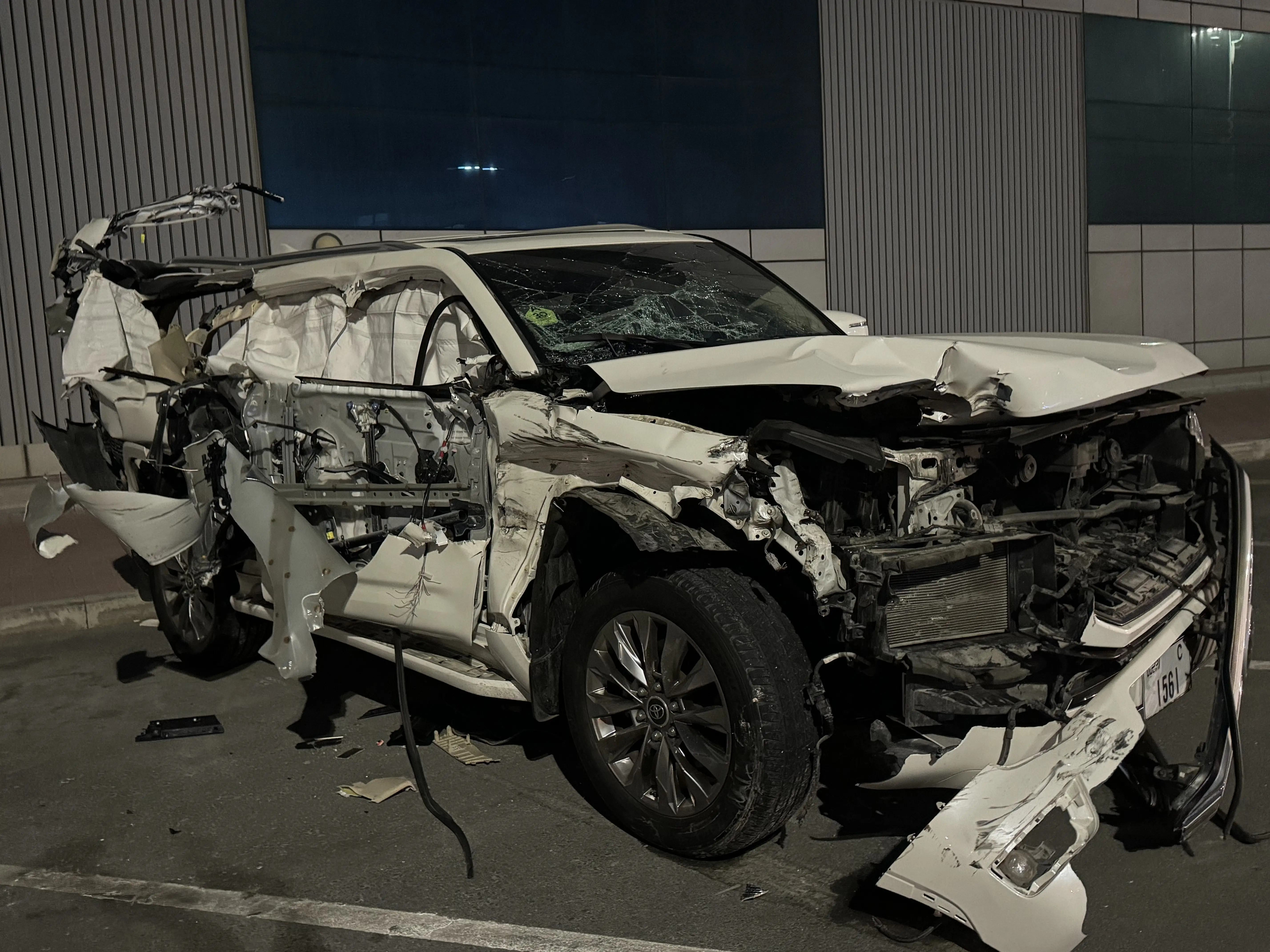
Insurance is one of the first recurring expenses you need to consider. Motor insurance in the UAE is regulated, and third-party liability insurance is the basic form of cover associated with vehicles licensed in the country.
There are two main insurance options:
Third-party insurance
Third-party liability insurance covers eligible liabilities for damage or injury caused to another party, according to the policy terms.
It does not provide the same protection for damage to your own vehicle that comprehensive insurance provides.
For private four-cylinder saloon cars, the official motor insurance tariff table lists a minimum of AED 750 and maximum of AED 1,300 for the specified 13-month third-party policy period. Rates vary for different vehicle classifications and engine configurations.
Comprehensive insurance
Comprehensive insurance provides broader protection and can cover damage to your own vehicle subject to the insurer’s policy terms, exclusions, excess and chosen benefits.
The car insurance cost in Dubai for comprehensive cover can vary dramatically. Factors insurers may consider include:
- Vehicle value
- Make and model
- Driver profile
- Claims history
- Vehicle age
- Repair costs
- Agency versus non-agency repair
- Coverage limits
- Optional benefits
- Policy excess
Comprehensive quotations for standard vehicles can start in the low thousands of dirhams in some cases, while expensive, high-performance or luxury cars can cost several thousand dirhams annually to insure.
For basic budgeting, someone buying an ordinary sedan could initially allow around AED 1,500–3,000 per year for comprehensive insurance, then confirm with an actual quotation before buying.
Fuel Cost in Dubai
Fuel is normally one of the largest regular monthly car expenses in Dubai. Unlike registration, petrol prices are not fixed for the entire year. UAE retail fuel prices are adjusted periodically, meaning the amount you spend can change even when your mileage remains the same.
For September 2026, UAE fuel prices were:
| Fuel Type | September 2026 Price |
| Super 98 | AED 3.80/litre |
| Special 95 | AED 3.69/litre |
| E-Plus 91 | AED 3.61/litre |
| Diesel | AED 4.30/litre |
Because prices change, these figures should be treated as a reference point rather than permanent fuel rates.
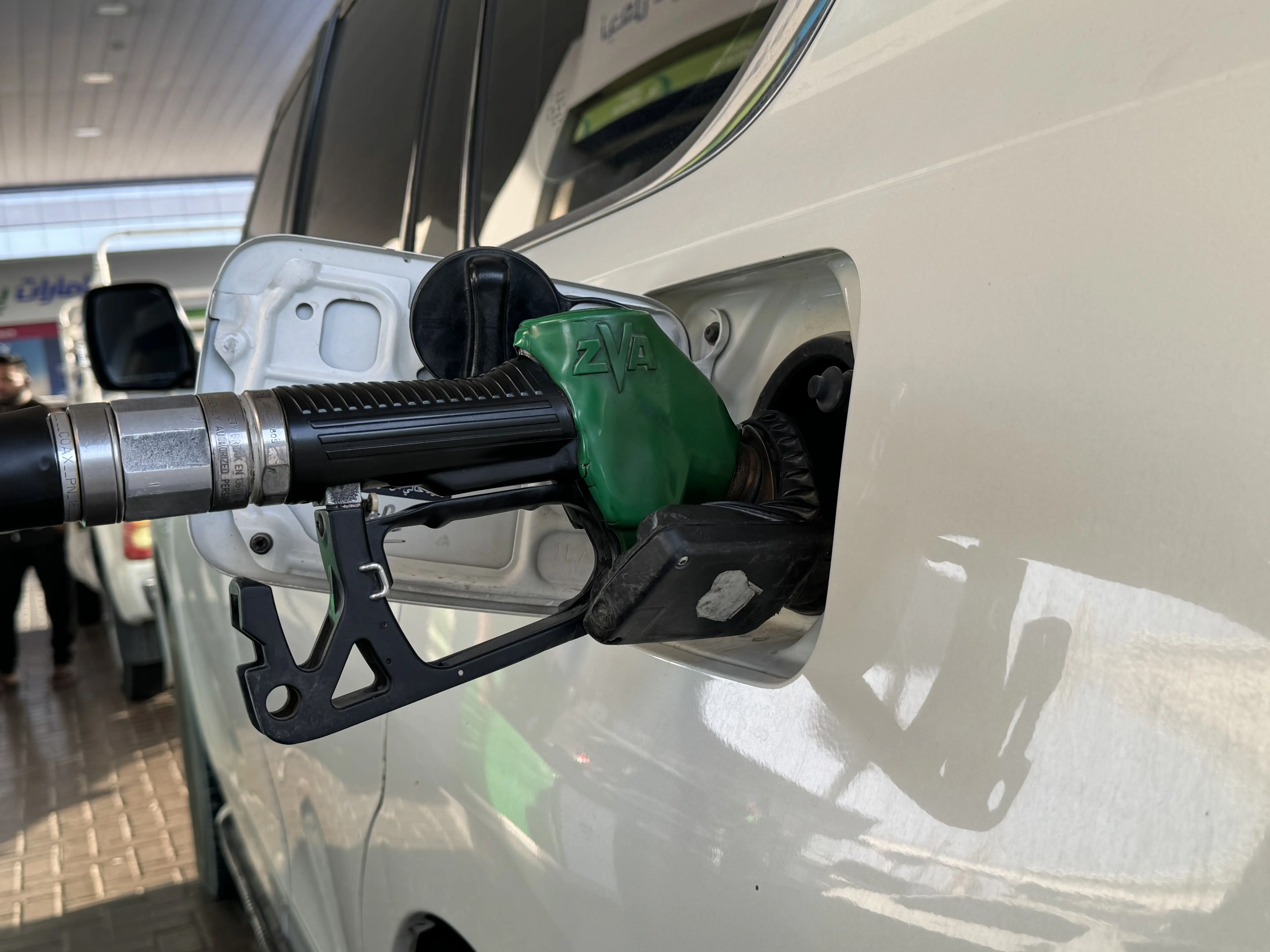
How to Calculate Your Monthly Fuel Cost
Instead of guessing, calculate fuel spending based on three numbers:
- Monthly driving distance
- Your car’s real-world fuel consumption
- Current fuel price
The basic formula is:
Monthly fuel required = monthly kilometres ÷ kilometres per litre
Then:
Monthly fuel cost = litres required × fuel price
For example, assume that you:
- Drive 1,500 km per month
- Average 12 km/litre
- Use Special 95 at AED 3.69/litre
You would consume around:
1,500 ÷ 12 = 125 litres
That makes the estimated monthly petrol expense:
125 × AED 3.69 = approximately AED 461
Your approximate annual petrol spending at the same price and mileage would be around AED 5,500.
However, the same mileage in an SUV averaging 8 km/litre would require around 187.5 litres per month.
At AED 3.69 per litre, that is approximately AED 692 per month.
This is why fuel economy has such a significant impact on the long-term cost of owning a car in Dubai.
How Much Does a Full Tank Cost in Dubai?
Tank size also provides a simple way to understand day-to-day fuel expenses. Using September 2026 Special 95 pricing as an example:
- 50-litre tank: approximately AED 184.50
- 60-litre tank: approximately AED 221.40
- 70-litre tank: approximately AED 258.30
- 80-litre tank: approximately AED 295.20
A driver filling a 60-litre tank twice per month would spend roughly AED 443 at that particular fuel price.
A driver filling the same tank four times would spend approximately AED 886.
The difference illustrates why asking “how much does petrol cost?” is less useful than asking how many kilometres will I actually drive each month?
Car Maintenance Cost in Dubai
The car maintenance cost in Dubai depends greatly on the vehicle. Two cars with the same purchase price can have very different maintenance expenses.
The most important factors include:
- Brand
- Model
- Age
- Mileage
- Availability of spare parts
- Service history
- Driving style
- Warranty coverage
- Dealer versus independent garage servicing
Routine maintenance is generally manageable. Major repairs are where costs can rise quickly.
Dubai’s heat can also place additional pressure on batteries, tyres, cooling systems and air-conditioning components. Following practical car maintenance tips for Dubai’s climate can help reduce avoidable wear and identify problems before they become expensive repairs.
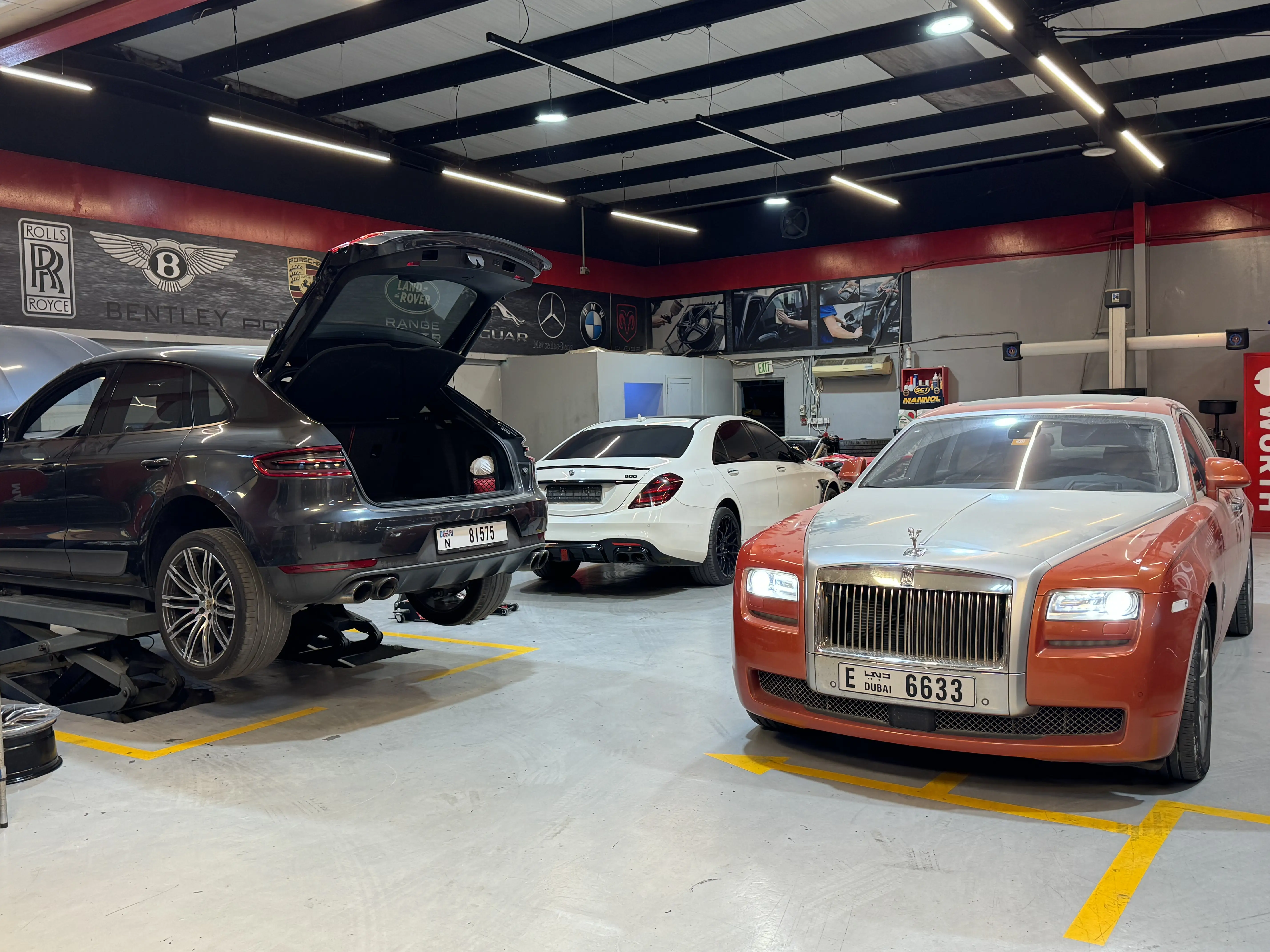
Regular Servicing
Vehicles normally require periodic servicing according to the manufacturer’s schedule. Basic service may include items such as:
- Engine oil
- Oil filter
- Fluid checks
- General inspection
Larger services may involve:
- Air filters
- Spark plugs
- Brake fluid
- Transmission-related service
- Belts
- Additional filters and consumables
For a mainstream economy car, allowing approximately AED 1,000–3,000 per year for routine maintenance can be a reasonable starting budget.
Premium vehicles can cost considerably more. The exact amount should always be checked against the manufacturer’s maintenance schedule and actual garage quotations.
Brake Pads and Brake Components
Brake pads are consumable items. How quickly they wear depends on:
- Traffic conditions
- Vehicle weight
- Driving habits
- Brake material
- Mileage
Dubai’s stop-and-go traffic can increase wear compared with steady highway driving.
Replacing brake pads on a mainstream vehicle may cost several hundred dirhams, while premium vehicles with larger or specialised braking systems can cost much more.
Brake discs or rotors also eventually require attention and can significantly increase the bill.
Battery Replacement
Dubai’s climate places considerable stress on car batteries. High temperatures can affect battery life, which means battery replacement is an expense owners should anticipate rather than treat as an unusual event.
Battery prices vary depending on:
- Capacity
- Brand
- Vehicle specifications
- Start-stop compatibility
- Warranty
Budgeting a few hundred dirhams for a conventional replacement battery is reasonable for many ordinary vehicles, but some premium cars require significantly more expensive batteries.
Tyre Replacement Costs
Tyres are another major periodic expense. Dubai’s high road temperatures make tyre condition particularly important.
The price of a complete set varies enormously depending on:
- Wheel diameter
- Tyre width
- Brand
- Performance rating
- Vehicle type
An economy vehicle with small wheels may have relatively affordable tyres. A luxury SUV using large 20-, 21- or 22-inch tyres could cost several times more.
As a general planning figure, a set of four tyres for a mainstream vehicle might cost approximately AED 1,000–2,500, although both cheaper and substantially more expensive options exist.
When buying a used car, inspect the tyres before agreeing on the price. A vehicle that needs four new tyres immediately effectively costs more than the advertised purchase price.
This is particularly important if you are browsing used cars for sale in the UAE, because two similarly priced vehicles can have very different immediate ownership costs depending on tyre, brake, battery and service condition.
Dubai Vehicle Registration Renewal Cost
Another predictable component of the annual car costs in Dubai is registration. RTA lists the renewal fee for a private light vehicle at AED 350, plus AED 20 in Knowledge and Innovation fees, making the basic renewal charge AED 370 before other applicable costs.
Vehicle registration is valid for one year following renewal. RTA also verifies valid insurance and technical inspection where applicable during the process.
So when creating your annual budget, do not think about insurance alone. You should potentially account for:
- Registration renewal
- Vehicle inspection
- Insurance
- Any applicable service or delivery fees
Vehicle Inspection Cost in Dubai
Depending on the vehicle and renewal requirements, a technical inspection may be required.
RTA currently lists the technical inspection charge for a light vehicle at AED 150, plus AED 20 Knowledge and Innovation fees, producing a total of AED 170 for that inspection category.
Re-inspection of a light vehicle is separately listed at AED 50 where applicable.
This is not one of the largest ownership expenses, but it should still be included when calculating your yearly budget.
Source: https://www.rta.ae/wps/portal/rta/ae/home/rta-services/service-details?serviceId=454
Salik Costs
Salik can be a minor expense for one Dubai resident and a major expense for another. It depends almost completely on your commute.
Dubai uses variable Salik pricing. Under the current system, weekday toll charges generally vary according to time:
| Period | Toll |
| Weekday peak hours | AED 6 |
| Weekday off-peak hours | AED 4 |
| 1:00 am–6:00 am | AED 0 |
| Sundays | Generally AED 4 during chargeable hours |
Peak periods are currently defined as 6:00 am–10:00 am and 4:00 pm–8:00 pm, while other specified daytime and evening periods are charged at the off-peak rate.
This makes route planning increasingly important when calculating the cost of having a car in Dubai.
Example: Regular Salik Commuter
Suppose your commute crosses two chargeable gates each way during peak periods.
That could mean:
4 toll crossings × AED 6 = AED 24 per working day
Across 22 working days:
AED 24 × 22 = AED 528 per month
Annualised, that is more than AED 6,000.
A driver who rarely uses tolled routes may spend only a small fraction of that.
This is why your home and workplace locations can affect your ownership costs almost as much as the type of car you buy.
Parking Costs in Dubai
Parking is another highly location-dependent expense. Someone living in a building with free residential parking and working in an office with a dedicated space may pay very little for parking.
Another driver could pay for parking:
- At home
- At work
- During meetings
- While shopping
- During leisure activities
That can turn parking into a meaningful monthly expense.
Before buying a car, check four things:
- Does your apartment include a parking space?
- Does your employer provide parking?
- Is your workplace inside a paid parking zone?
- Do you frequently visit areas where paid parking is required?
A parking budget of AED 0 for one driver and AED 500 or more for another can both be realistic.
Car Loan and Financing Costs
If you finance the vehicle, your loan payment will probably become your largest monthly car expense.
This is technically a purchase-related cost rather than a running cost, but you cannot calculate the true monthly car expenses in Dubai without considering it.
For example, imagine two people driving identical cars.
Driver A bought the car outright.
Driver B has a monthly finance payment of AED 1,800.
Their fuel, insurance and registration expenses may be identical, but Driver B’s monthly cash commitment is dramatically higher.
When comparing cars, pay attention to:
- Vehicle price
- Down payment
- Loan amount
- Interest or profit rate
- Loan duration
- Total repayment
- Early-settlement terms
Do not compare vehicles only by monthly instalment. A longer financing period can make the monthly payment appear smaller while keeping you financially committed for longer.
If keeping both the initial purchase price and future running expenses low is the priority, Shozon’s guide to cheap used cars in Dubai provides examples across several commonly available models and price ranges.
Depreciation: The Hidden Cost of Car Ownership
Depreciation is one of the biggest costs that drivers often ignore. Imagine buying a car for AED 100,000 and selling it several years later for AED 55,000. You have effectively lost AED 45,000 in vehicle value.
Even though that money did not appear as a monthly “depreciation bill”, it was part of your total ownership cost.
Depreciation varies depending on:
- Make
- Model
- Original purchase price
- Age
- Mileage
- Condition
- Accident history
- Service history
- Market demand
- New model launches
- Warranty status
Some popular vehicles retain their value comparatively well in the UAE used-car market. Other vehicles depreciate much more aggressively.
Models from high-volume brands can also be easier to compare because there are usually more vehicles available in the secondary market. For example, buyers can compare different years, mileage levels and asking prices across used Toyota cars for sale in the UAE before deciding what represents reasonable value.
When choosing between two cars, therefore, it may make sense to compare expected resale value as well as purchase price.
A cheaper car that loses value rapidly is not automatically cheaper to own.
Unexpected Repairs
Maintenance and repairs are not the same thing. Maintenance is planned. Repairs are often not.
Possible unexpected expenses include:
- Air-conditioning problems
- Cooling-system repairs
- Suspension components
- Engine sensors
- Electrical issues
- Transmission problems
- Water pumps
- Alternators
- Starter motors
- Engine mounts
This is especially important when purchasing a used vehicle outside warranty. A car may have an attractive price because expensive maintenance is approaching.
Before buying a used vehicle, consider:
- A pre-purchase inspection
- Complete service history
- Accident history
- Current mileage
- Upcoming service requirements
- Tyre condition
- Battery condition
- Brake condition
Our guide to buying a used car in the UAE explains the wider checks you should make before completing a purchase, including vehicle condition, history, documentation and test driving.
A slightly more expensive used car in excellent condition may ultimately be cheaper than a lower-priced car requiring immediate repairs.
Car Washing and Cleaning
Car washing appears insignificant compared with insurance or fuel, but small recurring expenses accumulate.
Dubai’s dust and weather conditions mean many owners wash their cars regularly. Suppose you spend AED 40 on washing twice a month.
That is:
AED 80 per month
or:
AED 960 per year
Drivers choosing detailing, polishing, paint protection or premium cleaning services can spend much more.
These expenses are optional to some extent, but they still form part of real-world ownership spending.

Traffic Fines
Traffic fines should not be treated as an unavoidable car ownership cost in Dubai. They are avoidable. However, they can substantially increase the amount an individual spends on driving.
Examples can include violations relating to:
- Speed limits
- Parking
- Mobile-phone use
- Lane discipline
- Traffic signals
- Registration requirements
- Other road rules
The best budgeting approach is simple:
Do not include fines as part of your expected normal budget.
Drive according to UAE traffic regulations instead.
Monthly Car Expenses in Dubai: Example Budgets
To understand how different driving habits affect the final cost, consider three simplified scenarios.
These examples exclude depreciation and vehicle finance unless stated otherwise.
Example 1: Low-Cost Compact Car
Assume:
- Fuel-efficient compact car
- Approximately 1,000 km/month
- Limited Salik use
- Free parking at home and work
- Affordable insurance
- Routine maintenance only
Possible monthly equivalent:
| Expense | Monthly Estimate |
| Fuel | AED 250–350 |
| Insurance | AED 100–175 |
| Registration/inspection allowance | AED 30–50 |
| Maintenance allowance | AED 100–150 |
| Tyres/battery allowance | AED 50–100 |
| Salik | AED 50–100 |
| Parking | AED 0–50 |
| Approximate total | AED 580–975/month |
This scenario represents relatively economical ownership.
Example 2: Typical Daily Commuter
Assume:
- Mid-size sedan or crossover
- Around 1,500 km/month
- Regular Salik use
- Some paid parking
- Comprehensive insurance
Possible monthly equivalent:
| Expense | Monthly Estimate |
| Fuel | AED 450–600 |
| Insurance | AED 125–250 |
| Registration/inspection allowance | AED 30–50 |
| Maintenance allowance | AED 125–250 |
| Tyres/battery allowance | AED 75–125 |
| Salik | AED 150–400 |
| Parking | AED 100–300 |
| Approximate total | AED 1,055–1,975/month |
Again, financing and depreciation are not included.
Example 3: Large SUV With Heavy Commuting
Assume:
- Large petrol SUV
- 2,500 km/month
- Multiple daily Salik crossings
- Paid parking
- Higher maintenance expenses
Possible monthly equivalent:
| Expense | Monthly Estimate |
| Fuel | AED 900–1,300+ |
| Insurance | AED 200–500+ |
| Registration/inspection allowance | AED 30–50 |
| Maintenance allowance | AED 250–600+ |
| Tyres/battery allowance | AED 150–300 |
| Salik | AED 400–700+ |
| Parking | AED 200–500+ |
| Approximate total | AED 2,130–3,950+/month |
For luxury SUVs, maintenance, tyres and insurance could push costs considerably higher.
How to Calculate Your Own Cost of Owning a Car in Dubai
Rather than relying on an internet average, create a personal ownership budget.
Use this formula:
Monthly ownership cost =
Fuel + insurance allowance + maintenance allowance + registration allowance + tyres/battery allowance + Salik + parking + finance payment + other regular expenses
Then separately consider depreciation.
For example:
- Fuel: AED 500
- Insurance: AED 200/month equivalent
- Maintenance: AED 150
- Registration/inspection: AED 45
- Tyres/battery reserve: AED 75
- Salik: AED 250
- Parking: AED 150
- Finance: AED 1,500
Total: AED 2,870 per month
That is a far more useful figure than simply knowing that your car instalment is AED 1,500.
What Affects the Cost of Having a Car in Dubai the Most?
For most drivers, five factors create the biggest differences.
1. How Much You Drive
More kilometres normally mean:
- More petrol
- Faster tyre wear
- More servicing
- Higher depreciation
- Greater exposure to tolls
Your commute should therefore influence which car you buy.
2. Your Vehicle’s Fuel Efficiency
A difference of a few kilometres per litre may look insignificant during one journey. Across 20,000 kilometres per year, it can become a substantial financial difference.
3. Your Daily Route
Two people driving the same distance can have different costs if one frequently crosses Salik gates and the other does not.
4. The Vehicle Brand and Model
Purchase price is only one consideration. Research:
- Service prices
- Spare-parts availability
- Tyre sizes
- Insurance
- Reliability
- Resale demand
before purchasing. Popular models from brands such as Nissan are widely represented in the UAE used-car market. Browsing current used Nissan cars for sale in the UAE can help you compare asking prices, mileage and model years before deciding whether a particular vehicle fits your total ownership budget.
5. Whether the Vehicle Is Under Warranty
A relatively new car with manufacturer warranty and a service package can offer greater cost predictability.
An older vehicle might be cheaper to purchase but carry greater repair risk. Neither option is automatically better. The important thing is to understand the financial trade-off.
New Car vs Used Car: Which Costs Less to Own in Dubai?
Used cars generally have lower purchase prices, but the answer becomes more complicated when total ownership costs are considered.
A New Car May Offer:
- Manufacturer warranty
- Lower repair risk
- Predictable maintenance
- Latest fuel-efficiency technology
- Service packages
- Fewer immediate consumable replacements
Its disadvantage is usually higher purchase price and potentially greater early depreciation.
A Used Car May Offer:
- Lower purchase cost
- Lower absolute depreciation in some cases
- Access to higher vehicle classes for the same budget
But older vehicles may require:
- Tyres
- Battery
- Brakes
- Suspension work
- Major servicing
- Mechanical repairs
A used car costing AED 50,000 plus AED 8,000 of immediate repairs is not really a AED 50,000 car from the buyer’s perspective. The vehicle’s condition is therefore critical.
How to Reduce Your Car Ownership Cost in Dubai
You cannot eliminate the costs of having a car, but you can control many of them.
Choose the Right Vehicle for Your Actual Needs
Do not buy a large SUV if your normal driving consists mainly of one person commuting through the city unless you genuinely need its additional space or capabilities.
A smaller vehicle usually means lower:
- Fuel consumption
- Tyre cost
- Purchase price
and potentially lower overall running costs.
Compare Insurance Annually
Do not automatically renew without comparing the coverage, excess and premium. However, the cheapest policy is not necessarily the best. Compare what the policy actually includes.
Maintain the Vehicle Properly
Skipping maintenance to save money can lead to much larger repair costs later. Follow the manufacturer-recommended schedule.
Monitor Tyre Pressure
Correct tyre pressure supports:
- Fuel efficiency
- Handling
- Tyre life
Plan Your Route
Where practical, route and travel-time choices can reduce exposure to peak Salik charges.
Consider Parking Before Choosing Where to Live
An apartment with an included parking space may provide meaningful value compared with a seemingly cheaper property where parking becomes an additional recurring expense.
Check Total Costs Before Buying a Used Car
Before committing, estimate:
- Insurance
- Registration
- Initial servicing
- Tyres
- Battery
- Required repairs
and not only the advertised selling price.
Is Owning a Car in Dubai Expensive?

It depends on your lifestyle and the type of car you choose. For a typical sedan or SUV, the main costs usually come from fuel, insurance, servicing, Salik, parking and registration. However, ownership costs can rise dramatically with premium and luxury vehicles, where the purchase price alone can reach hundreds of thousands of dirhams or even exceed AED 1 million.
Dubai makes car ownership highly convenient for many residents because of its extensive road network and the distances between different communities, workplaces and destinations.
A vehicle with a monthly instalment of AED 1,500 could easily require another AED 700–1,500 or more every month once petrol, insurance, servicing, Salik and parking are included. For luxury cars, these running costs can be significantly higher due to more expensive insurance, tyres, maintenance and repairs.
For some drivers, that additional mobility is worth the cost. Others who live and work close to Metro connections may find public transport, taxis, ride-hailing or occasional car rental more economical.
The right choice depends on how often you travel, where you travel, the type of vehicle you own and how much convenience you expect.
Cost of Owning a Car in Dubai: Final Checklist
Before buying your next car, answer these questions:
- What is the purchase price?
- Will I finance the car?
- What is the monthly instalment?
- How much will insurance cost for this exact vehicle?
- What fuel does it require?
- What is its realistic fuel economy?
- How many kilometres will I drive each month?
- How many Salik gates will I cross regularly?
- Do I have free parking at home?
- Do I have free parking at work?
- How much does routine servicing cost?
- How expensive are replacement tyres?
- Is the car still under warranty?
- Does it have a complete service history?
- What repairs are likely in the next 12 months?
- How well does the model retain its value?
If you can answer these questions, you can estimate the cost of owning a car in Dubai much more accurately than by looking at the vehicle price alone.
FAQs About Car Ownership Costs in Dubai
How much does it cost to maintain a car in Dubai?
For a mainstream car, routine maintenance in Dubai may cost around AED 1,000–3,000 per year, depending on the model, mileage, age and workshop. Luxury vehicles can cost considerably more.
Can a foreigner buy a car in Dubai?
Yes. UAE residents can generally buy and register a car in Dubai, provided they meet the required registration conditions, including valid identification, insurance and vehicle documents.
Which is the cheapest car to maintain in the UAE?
Models such as the Toyota Yaris, Toyota Corolla, Nissan Sunny and Mitsubishi Attrage are generally considered affordable to maintain because spare parts are widely available and servicing costs are relatively reasonable.
What is the cheapest car in Dubai to buy?
Entry-level sedans and hatchbacks from brands such as Mitsubishi, Nissan, Suzuki and some Chinese manufacturers are often among the cheapest new cars in Dubai. Used cars can offer significantly lower purchase prices.
What are the best new cars under AED 50,000 in the UAE?
Options under AED 50,000 typically include entry-level sedans and hatchbacks from brands such as Mitsubishi, Suzuki and several Chinese manufacturers. Buyers should also compare fuel economy, warranty, maintenance costs and resale value.
How much is a second-hand car in the UAE?
Used-car prices in the UAE vary widely. Older budget cars may be available for under AED 15,000, while newer SUVs and premium vehicles can exceed AED 100,000. Popular used sedans commonly fall between approximately AED 20,000 and AED 60,000.
Is it cheaper to buy a car in Dubai?
Cars in Dubai can be competitively priced compared with some international markets due to strong dealer competition and a large used-car market. However, buyers should also consider insurance, registration, fuel, maintenance and depreciation.
Why are cars cheaper in Dubai?
Some vehicles can be cheaper in Dubai because of strong competition between dealerships, a large supply of used cars and a different tax structure compared with some other countries. Prices still vary significantly by brand and model.
Note: Government fees, fuel prices, insurance premiums and other costs can change. Figures in this guide were checked against available information in September 2026 and should be verified before making a financial or vehicle-purchase decision.