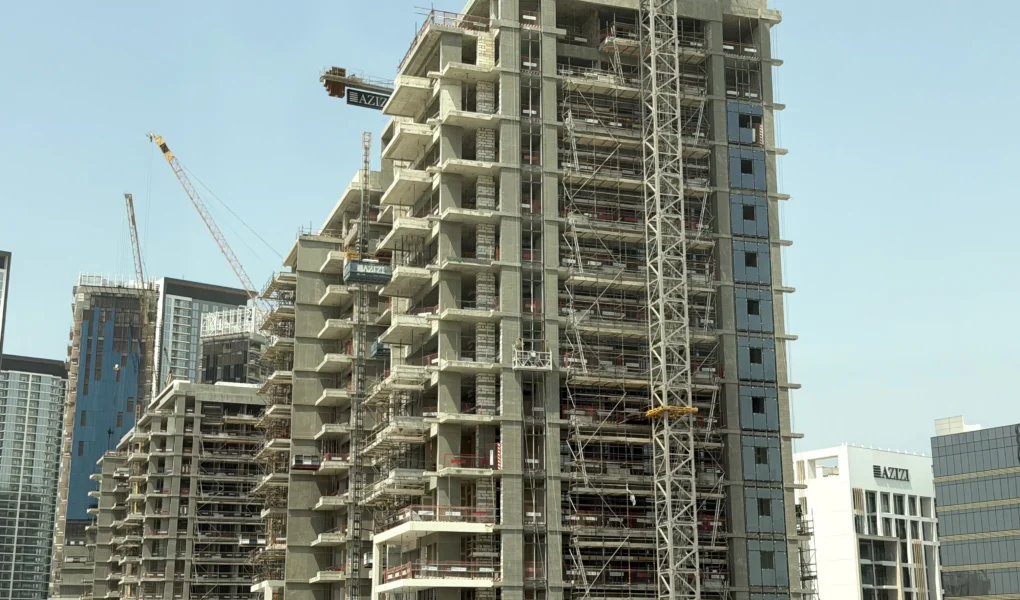
Is off plan property a good investment in Dubai? It can be when the price, developer, and project are properly verified.
Buyers must also be able to complete the payment plan without relying on resale.
Potential value growth comes with construction, financing, market, and delivery risks.
Compare the total cost, expected return, contract terms, and location demand before buying.
Is Off-Plan Property Worth It in Dubai?
For buyers asking whether off-plan property is worth it in Dubai, it may suit those with sufficient funds and a long-term strategy. It may not suit buyers seeking immediate income or a completed unit.
| Off-plan may be suitable when | It may not be suitable when |
| The buyer can fund every instalment and handover cost | Later payments depend on an early resale or uncertain financing |
| Comparable properties support the launch price. | The price relies mainly on promotional forecasts. |
| The developer and project pass independent checks | The project, payment destination, or contract cannot be verified |
| The location has credible future demand. | A large supply of similar units may limit demand. |
| The investor can accommodate delays and market changes | Immediate and predictable rental income is required |
Comparing current off-plan properties can help investors assess property types, locations, handover dates, and asking prices. However, every listing and its figures should be verified independently.
Dubai Off-Plan Market Snapshot
Dubai’s off-plan market remains highly active. According to the Dubai Land Department, off-plan project sales accounted for 132,500 transactions in 2025, highlighting the significant role of new developments in Dubai’s property market.

The wider real estate market also maintained strong momentum in early 2026. According to Dubai Land Department data for Q1 2026, Dubai recorded 60,303 real estate transactions worth AED 252 billion, with transaction value increasing 31% compared with the same period in 2025.
However, strong market activity does not mean every off-plan property is a good investment. Buyers should still assess the individual project’s launch price, comparable properties, future supply, rental demand, payment obligations, and total acquisition cost before making a decision.
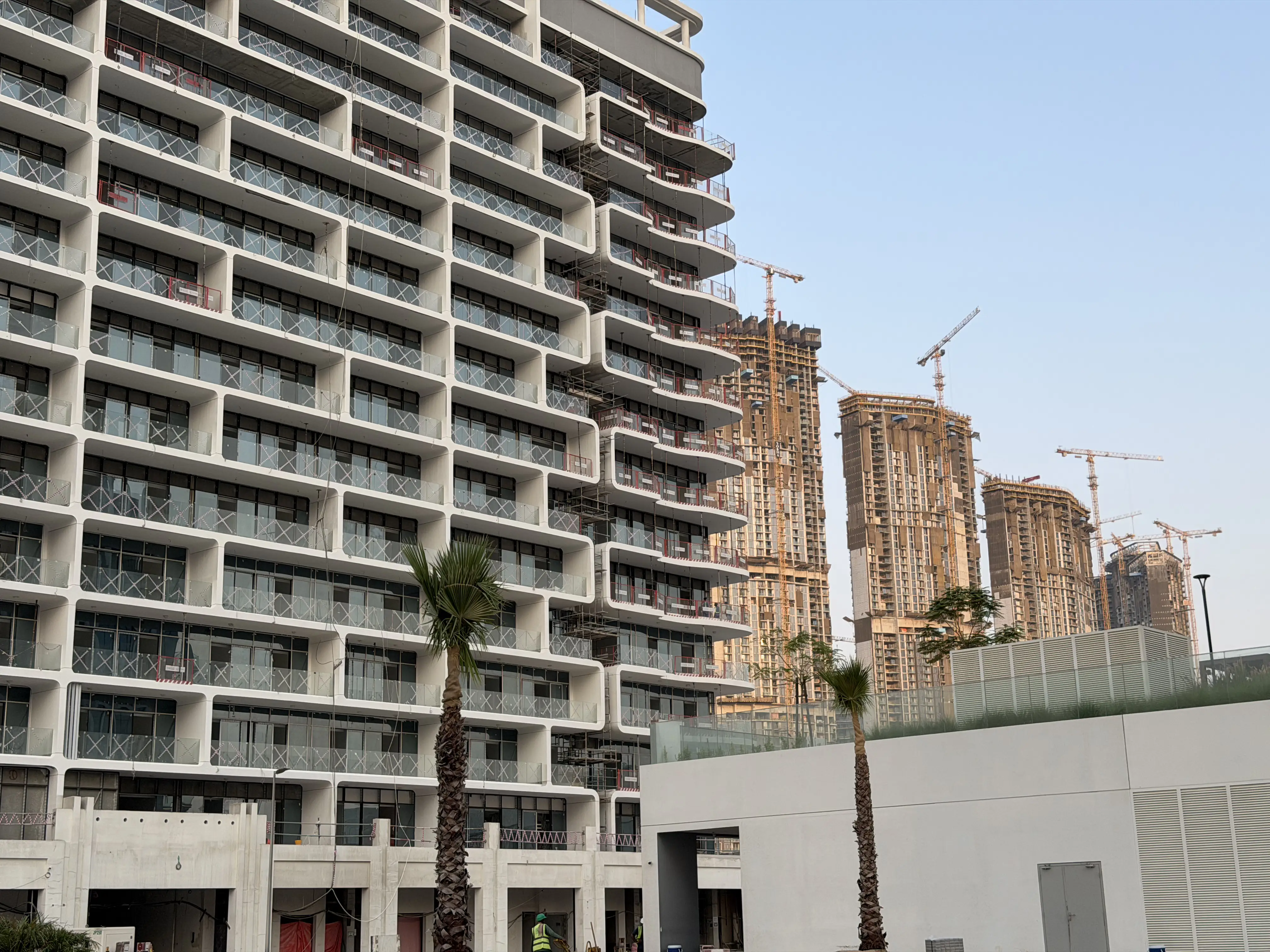
How Does an Off-Plan Investment Generate a Return?
An off-plan property may generate returns through price appreciation, rental income after handover, or a later sale. None of these outcomes is guaranteed.
Understanding how off-plan property works is important because a payment plan determines when instalments are due but does not create profit. Buyers must also include registration, furnishing, handover, ownership, and selling costs.
Investors should distinguish between:
- Capital appreciation: The increase in the property’s market value.
- Gross rental yield: Annual rent divided by the purchase price.
- Net rental yield: Annual rent after recurring expenses.
- Cash flow: Income remaining after ownership and financing costs.
- Net sale profit: Sale proceeds after all purchase and disposal costs.
Assess the investment using expected net returns rather than the size of the first instalment.
What Are the Main Benefits of Off Plan Property?
The benefits of off plan property depend on the buyer’s budget, investment objective, and holding period. Each benefit should be compared with the project’s price and risks.
1. Staged Payments Can Support Cash-Flow Planning
Off-plan payment plans may divide the price across booking, construction, handover, and post-handover instalments. Buyers should confirm they can complete every payment if their income changes, the project is delayed, or a planned resale does not occur.
2. Early Buyers May Have a Wider Unit Selection
Buying early may provide more choices of floors, views, orientations, and layouts. A practical unit with manageable annual costs may attract more tenants than a larger property with inefficient space.
3. The Property May Appreciate During Construction
Value may increase as market demand, infrastructure, or the surrounding community develops. However, new supply or an inflated launch price could leave the unit worth the same or less at handover.
4. New Properties Can Appeal to Tenants and Future Buyers
Modern layouts, amenities, and energy-efficient features may support rental and resale demand. However, new properties can still have defects or building-management problems that require attention after handover.
5. Buyers Can Enter a Future Community Before It Is Complete
Buying early may provide exposure to an area’s future development. Investors should verify which transport links, schools, shops, parks, and other facilities are confirmed rather than relying on proposed plans.
Explore properties for sale and find the right opportunity
What Are the Main Risks of Buying Off-Plan Property in Dubai?
Dubai buyers should assess several off-plan property risks, including delays, market changes, financing problems, contractual restrictions, and differences between the promised and completed unit.
Project registration and an escrow account provide safeguards but do not guarantee completion or profit.
1. Construction and Handover Can Be Delayed
Delays can postpone rental income, occupancy, and resale. Buyers should review the completion date, permitted extensions, notification process, and available remedies in the sales and purchase agreement.
2. Market Value Can Change Before Completion
Property values, rents, interest rates, and financing conditions may change before handover. If the completed unit is valued below the contract price, the buyer may need to provide additional funds.
3. The Final Unit May Not Match the Buyer’s Expectations
Architectural renders do not replace a physical inspection. Buyers should check the contractual plans and specifications for:
- Internal area and room dimensions
- Balcony or terrace size
- Materials, appliances, and fixtures
- Parking and storage rights
- View direction and nearby buildings
- Shared facilities and completion phases
- Permitted variations in area or specifications
A show unit may differ from the purchased property in size, upgrades, ceiling height, or outlook. Important features should therefore be confirmed in the sales and purchase agreement.
4. Resale Before Completion May Be Restricted
Reselling before handover may require a minimum percentage of the price to be paid, developer approval, settlement of outstanding instalments, and administrative fees. Investors must also find a buyer while competing with the developer and other resellers.
5. Future Ownership Costs May Be Uncertain
Service charges may not be confirmed at launch and can reduce the net rental yield. Investors should compare estimated charges with similar completed buildings and consider the cost of maintaining shared facilities.
6. Developer Performance Affects Delivery and Quality
Buyers should review comparable completed projects, previous delivery dates, construction quality, and defect handling. They should also distinguish between the master developer, project developer, and construction contractor.
Off-Plan vs Ready Property: Which Is Better for Investment?
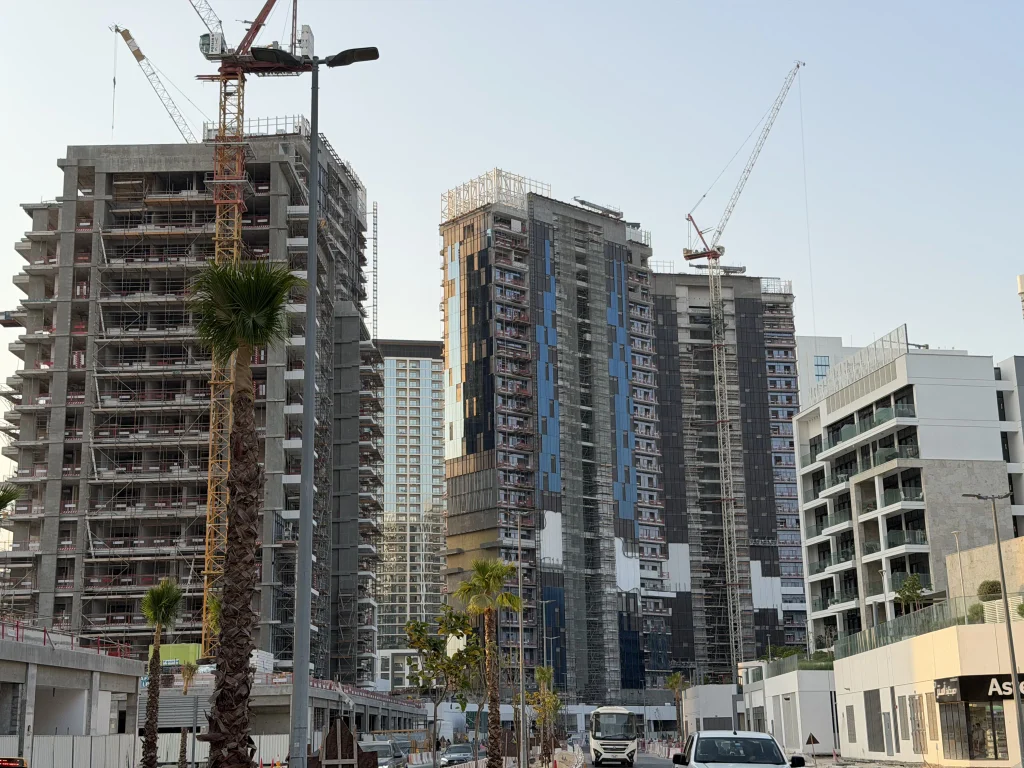
The better option depends on the investor’s objective. Off-plan property offers staged payments and access to developing communities, while ready property allows physical inspection and may generate rental income sooner.
| Factor | Off-plan property | Ready property |
| Physical inspection | Based on plans, specifications, and show units | The unit and building can be inspected |
| Rental income | Begins after handover and preparation | May begin soon after transfer |
| Payment timing | Usually divided across construction stages | Most costs are due around transfer |
| Construction risk | Remains until completion | Largely removed |
| Price comparison | Must consider current and future supply | Existing transactions and rents are easier to assess |
| Unit selection | Often wider during early releases | Limited to available properties |
| Annual costs | May only be estimated before completion | Existing costs and maintenance history can be reviewed |
| Finance | Depends on the project stage and lender policy | Valuation and financing may be clearer before purchase |
| Resale | May require developer approval | Usually easier after ownership transfer |
The question “is off plan property a good investment?” should be answered by comparing its expected return and risks with similar ready properties.
How to Calculate Whether an Off-Plan Property Is Profitable
The advertised price alone does not show whether an off-plan property is a sound investment.
The calculation must include acquisition costs, recurring expenses, payment timing, and the intended exit.
1. Calculate the Total Acquisition Cost
Start with the contract price, then include:
- Registration and government charges
- Agency and developer administration fees
- Mortgage and legal costs
- Handover, furnishing, and appliance expenses
- Maintenance or defects not covered by the developer
Fees can change, so buyers should verify the current amounts for the specific transaction.
2. Estimate Net Rental Yield
Gross yield excludes operating expenses. A more accurate formula is:
Net rental yield = (annual rent minus annual property costs) ÷ total acquisition cost × 100
Annual costs may include service charges, maintenance, management, insurance, vacancy, and leasing expenses. Expected rent should also be based on comparable properties with a similar location, size, and rental model.
3. Calculate a Conservative Resale Result
Deduct selling expenses, outstanding payments, and the total invested amount from the expected sale price. Test at least three scenarios:
| Scenario | Price assumption | Rental assumption | Delay assumption |
| Conservative | Flat or below forecast | Below expected rent | Handover delayed |
| Expected | Supported by market evidence | Based on comparable rent | Moderate delay |
| Optimistic | Strong appreciation | High but realistic rent | Delivery on schedule |
If the investment is profitable only in the optimistic scenario, the margin for error may be too narrow.
4. Account for the Time Value of Money
The same profit can produce a different return depending on how long the buyer’s money is committed. Compare payment dates with the expected timing of rent or resale using cash flow or internal rate of return calculations.
What Makes an Off-Plan Investment in Dubai Strong?

A sound off-plan investment decision in Dubai combines a suitable unit, defensible price, credible delivery plan, and sustainable demand. No single advantage can compensate for major weaknesses in the property or project.
1. A Price Supported by Comparable Evidence
Compare price per square foot, total price, layout, view, payment plan, and handover date. Nearby ready Off-Plan vs Ready Property Which Is Better for Investmentcan indicate what tenants and buyers currently pay, while any premium for an extended payment plan should be justified by the flexibility it provides.
2. A Location With More Than a Sales Story
Demand should reflect access to employment areas, transport, schools, shops, and healthcare. Researching Dubai neighbourhoods should also include the streets and future plots around the project, since access, noise, and rental appeal can vary within the same district.
3. A Unit That Will Remain Practical
When choosing an apartment in Dubai, check usable space, furniture placement, storage, natural light, lift access, and parking. A practical layout or scarce unit type may compete better when many similar properties enter the market.
4. A Developer With Relevant Experience
Review projects of a similar type and scale, including delivery dates, construction quality, defects, service charges, and after-sales support. Experience with low-rise homes does not necessarily prove the ability to complete a large tower or master community.
5. An Exit Strategy That Does Not Depend on Perfect Conditions
Choose between resale before completion, resale after handover, leasing, or personal use. The strategy should remain viable if handover is delayed, rent is lower, or resale takes longer than expected.
Legal and Project Checks Before Paying a Deposit
Dubai regulates off-plan developments through registration and project-specific escrow accounts.
Buyers evaluating an off-plan investment should still verify the project, payment route, and contractual rights.
1. Verify the Developer and Project
Use Dubai Land Department channels and Dubai REST to check the developer, project, and construction information. Confirm that the legal names and payment details match before transferring funds.
2. Confirm the Project Escrow Account
Under Dubai’s Law No. 8 of 2007, each project must have a dedicated escrow account. Escrow protects project funds but does not guarantee completion, profit, or rental demand.
3. Check Interim Registration
Dubai’s Law No. 13 of 2008 requires off-plan transactions to be entered in the Interim Property Register. Buyers should confirm the registration and retain the supporting documents.
4. Review the Sales and Purchase Agreement
The SPA defines the buyer’s obligations and rights. Check:
- Parties, unit details, and payment dates
- Completion date and permitted extensions
- Changes to the area, plans, or materials
- Default, cancellation, and refund terms
- Resale, handover, and defect procedures
- Service charges and dispute resolution
A reservation form, brochure, or verbal promise does not replace the signed SPA.
Off-Plan Property Due-Diligence Checklist
Before deciding is off plan property a good investment, complete a project-specific review rather than relying on general advantages.
- Define the investment objective and complete budget.
- Compare similar ready and off-plan properties.
- Check asking prices, recorded transactions, and future supply.
- Verify the developer, project, agent, and payment instructions.
- Review delivery history and completed-project quality.
- Have the SPA reviewed by an independent adviser.
- Confirm escrow, registration, and assignment requirements.
- Estimate net yield after service charges, vacancy, and management.
- Keep all agreements, receipts, and project communications.
Is Off Plan Property a Good Investment for Foreign Buyers?
Under Dubai’s Law No. 7 of 2006, foreign buyers may acquire eligible property interests in designated areas, subject to the applicable rules and transaction.
Foreign investors should also consider currency changes, banking, remote management, succession planning, and cross-border costs. Residency eligibility should be checked separately against current official requirements.
The same core test applies: is off plan property a good investment after all cross-border costs and risks are included? The answer depends on the property and the buyer’s circumstances, not nationality alone.
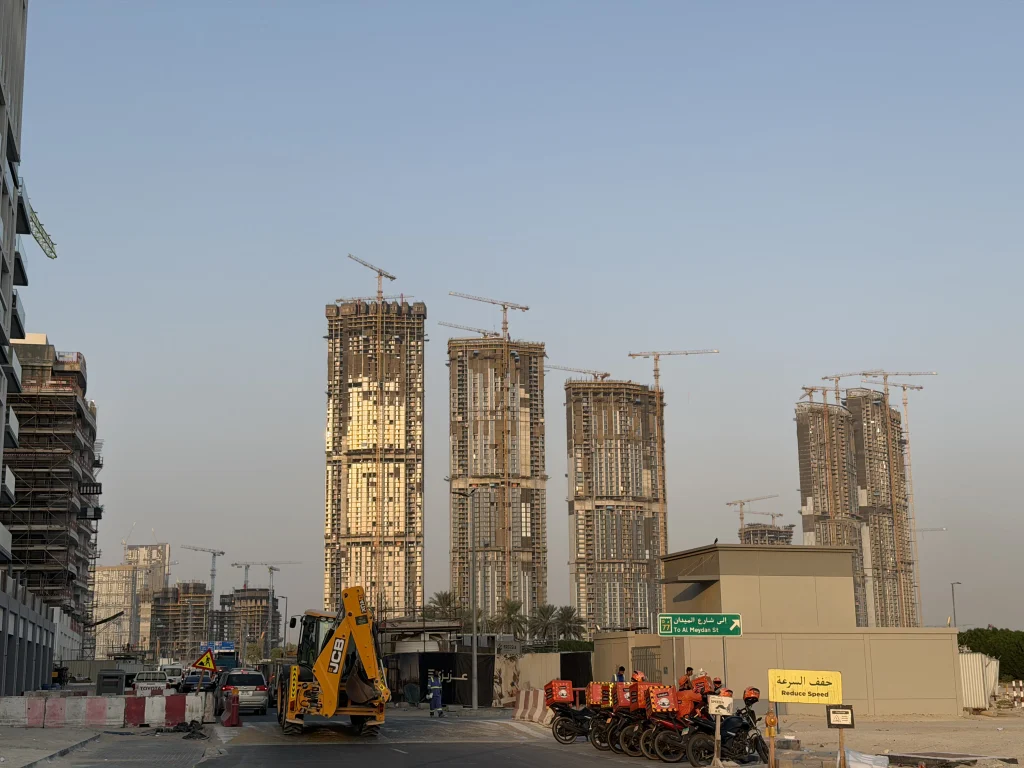
Final Verdict: Is Off-Plan Property a Good Investment in Dubai?
So, is off plan property a good investment in Dubai? It can be when the price is supported by comparable evidence, the project is verified, and the buyer can complete every payment without relying on resale.
The main advantages include staged payments and potential value growth. The main risks include delayed income, construction uncertainty, contractual restrictions, and changing market conditions.
Compare the unit with suitable ready properties, calculate the net return, test a delay or price decline, and review the SPA before paying.
FAQs About Off-Plan Property Investment in Dubai
Is it worth buying off the plan?
It may be worthwhile when the price is competitive, the developer is reliable, and the buyer can complete every payment without depending on resale.
What is the difference between gross and net rental yield?
Gross rental yield is annual rent divided by the purchase price. Net rental yield deducts recurring costs such as service charges, maintenance, management, insurance, and vacancy before calculating the return.
Is it safe to buy off-plan property in Dubai?
It can be safer when the project and developer are verified, payments enter the official escrow account, and the SPA receives independent review.
What are the downsides of buying a home off-plan?
The main downsides include delayed rental income, construction delays, uncertain final quality, market changes, and resale restrictions.
Can an off-plan property lose value before handover?
Yes. An off-plan property can lose value before handover because of weaker demand, increased supply, project delays, financing conditions, or an inflated launch price.
Can I sell my off-plan property in Dubai?
Yes, registered off-plan units may generally be resold, subject to the SPA, developer requirements, outstanding payments, and registration procedures.
Who are the most trusted off-plan developers in Dubai?
There is no official trust ranking, so buyers should check licensing, delivery history, completed projects, construction quality, and defect handling.
Can you negotiate the price of an off-plan property?
Sometimes, depending on demand and the project stage, while payment terms, administrative fees, or included upgrades may also be negotiable.
What are the risks of buying a property off the plan?
Risks include delays, lower handover valuation, financing problems, specification changes, developer performance, and limited resale demand.
Do you lose your deposit if you pull out of a house sale?
Not automatically, but the developer may retain part of the buyer’s payments according to the contract, project progress, and applicable Dubai law.
Sources:
- Law No. 8 of 2007 Concerning Escrow Accounts for Real Estate Development
- Law No. 13 of 2008 Regulating the Interim Property Register
- Law No. 7 of 2006 Concerning Real Property Registration in Dubai
- Law No. 19 of 2020 Amending Law No. 13 of 2008
- Dubai Land Department Project Status Enquiry