To choose car tyres in the UAE, start with the size, load index and speed rating shown on your vehicle’s door placard or in the owner’s manual, then check the four-digit DOT date code on each tyre. In Dubai, a vehicle fails the RTA technical test if its tyres are more than five years past their manufacturing date, so avoid tyres with little remaining service life. Finally, compare heat suitability, wet braking and durability between compatible models.
High summer temperatures, long motorway journeys and occasional heavy rain place additional demands on tyres. Even a tyre that fits your wheels may be unsuitable if its load rating, speed rating or construction does not meet your vehicle’s requirements.
Before buying, check the approved tyre size, manufacturing date, tread performance and UAE safety standards. These factors help you select tyres that balance safety, performance and long-term value.
Six Checks Before Buying Car Tyres in the UAE
Start with your vehicle manufacturer’s specifications, then consider your daily driving conditions.

A family sedan used around Dubai has different tyre requirements from an SUV regularly travelling on rough tracks or a performance car driven on motorways.
Follow these six steps before purchasing:
- Confirm the approved tyre size: Check the owner’s manual or tyre information placard.
- Verify load and speed ratings: Both must meet the vehicle manufacturer’s requirements.
- Assess UAE weather suitability: Prioritise performance in high temperatures and adequate wet-road grip.
- Check the manufacturing date: Confirm the tyres have sufficient remaining service life.
- Compare tyre performance: Consider braking, handling, road noise, durability and rolling resistance.
- Verify compliance and fitting: Select tyres that meet applicable UAE requirements and arrange professional installation.
How to Read Tyre Size, Load Index and Speed Rating Markings
Tyre dimensions are printed on the sidewall as a combination of numbers and letters.
1. What Do the Numbers and Letters on a Tyre Mean?
For example, 215/55 R17 94V contains six important specifications.
| Marking | Meaning | Example |
| 215 | Tyre section width | 215 mm |
| 55 | Aspect ratio | Sidewall height is 55% of width |
| R | Construction | Radial |
| 17 | Wheel diameter | 17 inches |
| 94 | Load index | 670 kg per tyre |
| V | Speed rating | 240 km/h |
The load index indicates the tyre’s rated carrying capacity under specified conditions. It does not override the vehicle’s permitted loading limits.
The speed rating indicates the tyre’s certified speed capability under defined conditions. It does not authorise driving above legal speed limits.
2. Where Can You Find Your Car’s Correct Tyre Size?
The approved tyre size is usually listed in the owner’s manual and on a tyre information placard near the driver’s door.
Check these specifications rather than relying exclusively on the tyres currently fitted, particularly when purchasing a used vehicle in UAE.
Some vehicles require different tyre sizes on the front and rear axles. Follow the manufacturer’s recommended configuration.
3. Can You Fit Wider or Lower-Profile Tyres?
Changing tyre dimensions can affect steering response, ride comfort, speedometer accuracy, and suspension clearance.
Wider tyres do not automatically improve braking or handling. Performance depends on tread design, rubber compound, and vehicle compatibility.
Before changing dimensions, confirm that the proposed size is manufacturer-approved, compatible with your wheels, and permitted under applicable UAE vehicle modification requirements.
Which Car Tyres Are Best for UAE Weather and High Temperatures?
UAE tyres must perform reliably during sustained summer heat, motorway journeys and occasional wet-road conditions.
1. Which Tyre Types Suit UAE Driving Conditions?
High temperatures can accelerate tyre ageing, while underinflation and excessive loads increase internal heat generation. Tyre construction, performance characteristics, and correct maintenance all influence durability.
| Tyre Type | Suitable Use | Main Consideration |
| Summer tyres | Warm-weather road driving | Dry and wet-road performance |
| All-season tyres | General daily driving | Suitability for UAE temperatures |
| Touring tyres | City and motorway journeys | Comfort, noise and durability |
| Performance tyres | Sports and performance vehicles | Grip, steering and wear |
| All-terrain tyres | Mixed road and off-road use | Durability and surface traction |
2. Are Summer Tyres Better Than All-Season Tyres in Dubai?
Summer tyres are designed for warm-weather conditions and can provide strong dry-road handling and wet braking.
All-season tyres balance performance across a wider temperature range, although individual models differ in their suitability for extreme heat.
Compare compatible products using braking performance, load capacity, temperature suitability, and manufacturer recommendations.
3. Why Is Wet Grip Important in the UAE?
Although rainfall is relatively infrequent, wet-road traction remains important.
Water mixed with dust and road contaminants can reduce grip, especially during the early stages of rainfall.
Tyres with adequate tread depth and effective water-dispersal grooves help reduce aquaplaning risk.
When comparing models, prioritise verified wet-braking performance alongside dry-road handling.
How to Check Car Tyre Manufacturing Dates and Age in the UAE
One important part of how to choose car tyres is verifying when each tyre was manufactured.
Rubber and internal tyre components can deteriorate through ageing, heat exposure, storage conditions, and use.
A tyre may retain substantial tread while becoming unsuitable because of age or structural damage.
1. How Do You Read the Tyre Manufacturing Date?
Many tyres feature a DOT identification code with a four-digit manufacturing date.
The first two digits represent the production week, while the final two identify the year.
For example:
2425 = Week 24 of 2025
The complete date code may appear on only one sidewall.
Check the manufacturing date of every tyre before installation, particularly when purchasing a complete set.
2. What Is the Maximum Tyre Age Allowed in Dubai?
Dubai’s Roads and Transport Authority (RTA) confirms that tyres are valid for a maximum of five years from their manufacturing date when renewing vehicle registration, in accordance with Ministry of Industry and Advanced Technology requirements.
Tyres showing significant damage must be replaced even when they remain within the permitted age limit.
Check current inspection requirements for your vehicle category and emirate. Cracks, bulges, internal damage and excessive wear can make replacement necessary earlier.
3. Should You Buy Tyres Manufactured Last Year?
A tyre manufactured during the previous year is not automatically unsuitable.
However, storage conditions, remaining service life, and applicable UAE sales requirements should be considered.
Request the manufacturing date before purchasing and ask the retailer to confirm that the tyres meet current UAE standards.
A recent production date is particularly valuable when comparable products are available at similar prices.
How to Check Tyre Tread Depth, Cracks and Damage
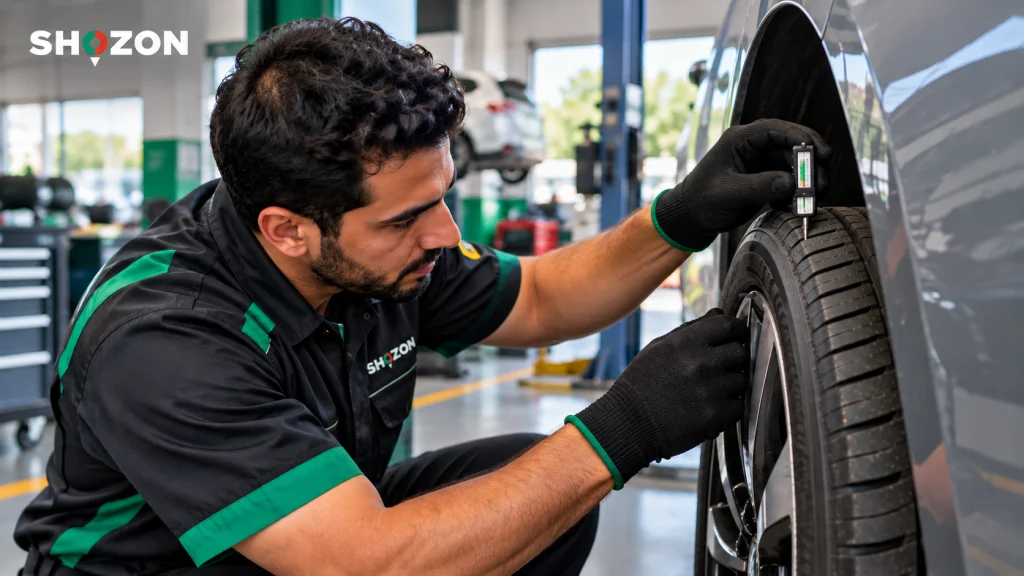
Tyre condition directly affects braking, handling and water evacuation.
Inspect the tread surface and accessible sidewalls regularly, particularly before extended motorway journeys.
1. Look for these warning signs:
- Excessively worn tread.
- Uneven wear across the tyre.
- Sidewall cracks or deep cuts.
- Bulges or unusual deformation.
- Exposed cords or reinforcement.
- Repeated pressure loss.
- Unusual vibration while driving.
A visible sidewall bulge may indicate internal structural damage. Do not continue normal driving on a tyre with a suspected structural failure.
2. What Is the Minimum Tyre Tread Depth?
A minimum tread depth of 1.6 mm is commonly specified for passenger-car tyres, although drivers should verify the current requirements applicable to their vehicle.
Reaching the legal minimum does not necessarily mean a tyre still provides satisfactory wet-road performance.
As tread depth decreases, the tyre’s ability to disperse water can deteriorate.
Use a tread-depth gauge to measure several grooves around the circumference and across the width of each tyre.
3. Can Tyres Be Unsafe Even With Good Tread?
Yes. Tyres can suffer damage that is not apparent from tread depth.
Impacts, prolonged underinflation, and overloading can damage internal components without leaving obvious external marks.
Ageing also depends on storage conditions, temperature exposure and maintenance, not simply distance travelled.
Arrange a professional inspection whenever the tyre’s condition or previous use is uncertain.
How to Choose Tyres for Sedans, SUVs, 4WDs and Electric Vehicles
Vehicle weight, intended use, and driving characteristics influence tyre selection.
| Vehicle type | Main tyre priorities |
| Sedan | Comfort, braking, fuel efficiency |
| SUV | Load capacity, stability, durability |
| 4WD | Surface compatibility, traction, sidewall strength |
| Sports car | Handling, grip, steering response |
| Electric vehicle | Load rating, rolling resistance, noise |
1. Which Tyres Are Suitable for Daily Commuting?
Drivers travelling regularly around Dubai, Sharjah or Abu Dhabi benefit from road-focused tyres that provide dependable braking, stability and comfort.
Touring tyres can be suitable for these conditions when they meet the manufacturer’s specifications.
For frequent motorway use, compare road noise, directional stability and expected tread life alongside the purchase price, as tyre replacement is a recurring part of the cost of owning a car in Dubai.
2. Do Electric Cars Need Special Tyres?
Electric vehicles may place greater demands on tyres because of vehicle weight and immediate torque delivery.
Tyres must meet the manufacturer’s dimensional, load and speed requirements.
Low-rolling-resistance models can help reduce energy consumption, while noise-optimised designs may improve cabin comfort.
An EV-specific label is not essential when another approved tyre meets all relevant vehicle requirements.
3. Are All-Terrain Tyres Necessary for Desert Driving?
All-terrain tyres can benefit drivers regularly travelling on rough tracks or mixed surfaces.
However, soft-sand driving also depends on vehicle capability, terrain, tyre pressure and appropriate recovery equipment. If you are choosing a vehicle for off-road trips, compare the best SUVs for desert driving in the UAE.
Aggressive tread patterns are not automatically better on every sandy surface.
Choose off-road tyres according to the vehicle manufacturer’s guidance and your actual driving conditions.
How to Compare Tyre Performance, Quality and Price
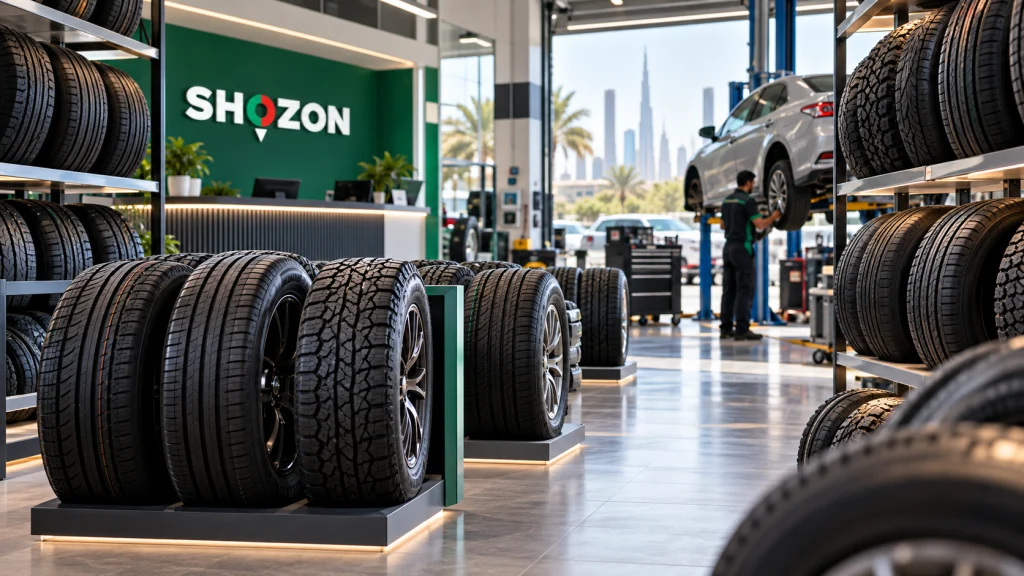
Understanding how to choose car tyres requires comparing braking performance, comfort and durability rather than relying on brand reputation or discounts alone.
Tyres with identical dimensions can differ substantially in braking, comfort, road noise and durability.
Compare compatible tyres using published wet-braking results, rolling-resistance ratings and manufacturer specifications.
1. Which Tyre Performance Features Matter Most?
Consider these characteristics:
- Wet braking: Indicates stopping performance on wet surfaces.
- Dry handling: Affects steering response and vehicle stability.
- Rolling resistance: Influences fuel consumption or EV range.
- Road noise: Matters during longer motorway journeys.
- Tread durability: Affects replacement frequency and ownership costs.
- Ride comfort: Influences how the vehicle responds to road irregularities.
Where available, recognised tyre labels provide information about wet grip, rolling resistance and external noise.
However, these ratings do not assess every performance characteristic or establish UAE product conformity.
2. Are Expensive Tyres Always Better?
A higher tyre price does not necessarily mean shorter braking distances, lower road noise or longer tread life.
A premium performance tyre may provide strong handling but wear faster than a touring tyre.
Less expensive models can offer reasonable value when they meet the required specifications and have reliable performance evidence.
Compare purchase price, expected durability, safety performance, fitting charges, and warranty coverage.
Avoid products with uncertain manufacturing origins, questionable authenticity, or unsuitable ratings.
How to Find Reliable Tyre Shops in Dubai?
When searching for the best tyre shops in Dubai, compare suppliers based on product authenticity, technical expertise, fitting standards, and warranty support.
1. What Should You Check Before Choosing a Tyre Shop?
A reliable retailer should explain tyre specifications, provide manufacturing dates, and confirm applicable safety requirements before installation.
Ask whether the quoted price includes:
- Tyre fitting and wheel balancing.
- New valves when required.
- Tyre-pressure monitoring system servicing.
- Disposal of old tyres.
- Applicable taxes and charges.
- Alignment inspection when necessary.
- Written warranty documentation.
Request an itemised quote identifying the exact tyre model, size, load index and speed rating.
2. Is It Better to Buy Tyres Online or In Store?
Online purchasing can make comparing prices, specifications and availability easier.
Before ordering, confirm the tyre’s manufacturing date, seller credentials, warranty terms and installation arrangements.
In-store purchasing allows you to inspect the product and discuss existing tyre wear with a technician.
Both options are suitable when the tyres are genuine, correctly specified and professionally fitted.
3. How Can You Avoid Counterfeit or Poor-Quality Tyres?
Purchase from a traceable supplier and check the markings on every tyre.
Confirm that the brand, model, dimensions, and manufacturing details match your invoice.
Altered markings, unusually low prices, and unclear warranty conditions warrant further investigation.
If authenticity is uncertain, contact an authorised distributor before installation.
Explore Used Cars For Sale On Shozon
How to Maintain Tyres Safely During UAE Summers
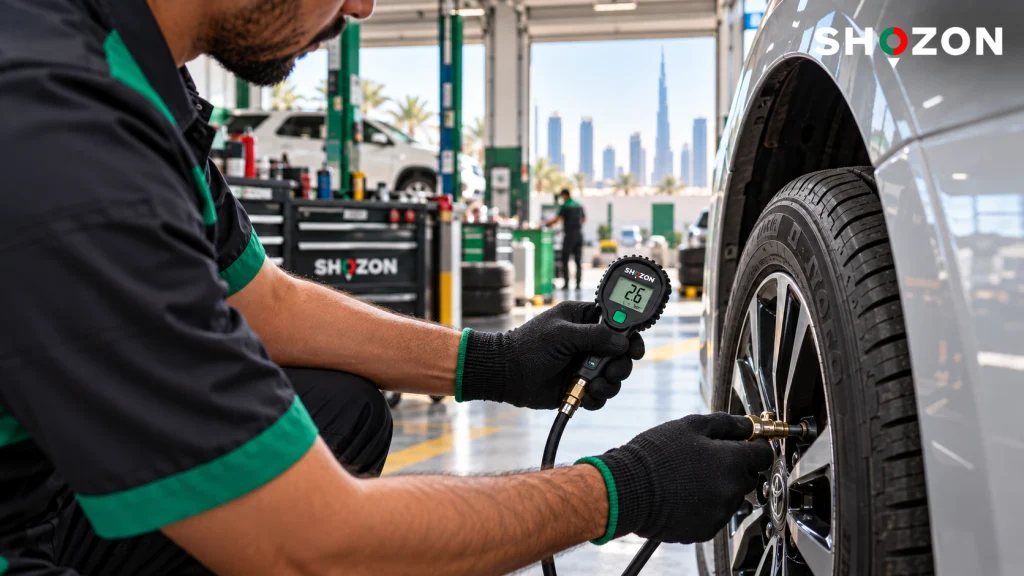
After learning how to choose car tyres, correct maintenance helps preserve tyre performance and service life.
High temperatures make inflation checks, loading limits, and regular inspections especially important.
1. How Often Should You Check Tyre Pressure?
Check tyre pressure at least monthly and before extended journeys. More frequent inspections may be appropriate during demanding conditions.
Use the vehicle manufacturer’s recommended cold inflation pressure, usually displayed on the door placard or in the owner’s manual.
The maximum pressure shown on the tyre sidewall is not the recommended everyday inflation pressure.
For an accurate reading, check the tyres after the vehicle has been parked for several hours.
Do not release air simply because pressure increases after driving. tyres naturally become warmer during use.
2. When Should You Rotate and Balance Tyres?
Tyre rotation can distribute wear more evenly when the vehicle manufacturer’s specifications permit it.
Follow the recommended service interval and rotation pattern.
Staggered wheel sizes and directional tread designs may restrict rotation options.
Wheel balancing corrects vibration caused by uneven rotating mass, while alignment addresses wheel geometry that can contribute to steering pull and irregular wear.
3. What Should You Check Before a Long Motorway Journey?
Before travelling between Dubai and Abu Dhabi or undertaking a longer journey, inspect tyre pressure, tread condition and visible damage.
Check the spare tyre or puncture-repair equipment and confirm that the vehicle is not overloaded.
The RTA’s June 2026 summer maintenance campaign emphasised regular vehicle inspections and tyre-pressure maintenance during high-temperature conditions.
What to Check Before Paying for New Car Tyres
Check these details before approving tyre installation.
| Check | What to verify |
| Size | Approved vehicle dimensions |
| Load index | Meets manufacturer requirements |
| Speed rating | Meets manufacturer requirements |
| Tyre category | Appropriate for normal driving |
| Production date | Acceptable manufacturing age |
| Condition | No visible defects or damage |
| UAE compliance | Applicable requirements satisfied |
| Installation | Correct fitting and balancing |
| Warranty | Written coverage and conditions |
| Invoice | Exact tyre specifications recorded |
Ask the technician to explain any proposed changes from the manufacturer’s original specifications.
After installation, confirm that the tyre-pressure monitoring system operates correctly and investigate unusual vibration, noise or steering behaviour.
Choose Car Tyres That Match Your Vehicle and UAE Driving Conditions
Knowing how to choose car tyres helps you compare products based on vehicle compatibility, safety and everyday performance.
Start with approved specifications, inspect manufacturing dates and tyre condition, and account for UAE heat, wet-road conditions and motorway driving.
Before installation, verify the supplier’s credentials, compliance requirements and fitting costs. Regular pressure checks and inspections will help maintain dependable tyre performance throughout the permitted service life.
Frequently Asked Questions About Choosing Car Tyres in the UAE
How do I choose the right tyre for my car?
Check your vehicle’s approved tyre size, load index and speed rating, then compare suitable tyres based on UAE climate conditions, braking performance and manufacturing date.
What is the 3-year rule for tyres?
There is no universally recognised three-year tyre replacement rule; in Dubai, tyres must meet the RTA’s five-year maximum age requirement for registration renewal.
Which tyre is better, H or V?
V-rated tyres support speeds up to 240 km/h, compared with 210 km/h for H-rated tyres, but the correct choice depends on your vehicle manufacturer’s requirements.
Can I use 275 tyres instead of 265?
Only if the complete replacement tyre size is approved for your vehicle and compatible with its wheels, clearance, load requirements, and applicable UAE regulations.
How many tyres should you change at a time?
Replacing all four is preferable; if you can replace only two, fit matching new tyres to the rear axle and check any AWD requirements.
Which type of tyre is the best?
The best tyre meets your vehicle’s specifications and provides suitable heat resistance, wet-road grip, braking performance, and durability for UAE driving conditions.
How many years do most tyres last?
Tyre lifespan varies with usage, maintenance, and environmental conditions, but Dubai limits tyre validity to five years from manufacture for registration renewal.
How to determine the correct tyre size?
Check the tyre information placard near the driver’s door or your owner’s manual for the approved width, aspect ratio, wheel diameter, load index, and speed rating.
Is a 7-year-old tire still good?
No. A seven-year-old tyre exceeds Dubai’s five-year maximum validity for vehicle registration renewal, even if its tread appears acceptable.
Sources
1. Michelin – Tyre Load Rating and Tyre Speed Rating
Explains how to interpret tyre load indexes and speed ratings and why selecting specifications compatible with your vehicle is essential for safety.
Explains the causes of aquaplaning and how tyre tread depth and water dispersion affect traction and driving safety on wet roads.
3. NHTSA – Tire Safety Ratings and Awareness
Provides official guidance on tyre safety, manufacturing date codes, tread wear, maintenance, and warning signs that indicate replacement may be necessary.
4. RTA Dubai – Vehicle Registration Service Details
Outlines vehicle registration and renewal procedures in Dubai, including technical inspection requirements and applicable vehicle safety checks.
Explains the importance of tyre tread depth, how to identify excessive wear and when tyre replacement should be considered.
6. European Commission – What Is the Tyre Label?
Explains European tyre labelling standards, including rolling resistance, wet grip performance and external rolling noise classifications.
7. NHTSA – Summer Driving and Road Trip Tips
Provides practical summer driving safety recommendations, including tyre pressure checks, vehicle maintenance, and preparation for long journeys.
8. RTA Dubai – Awareness Campaigns on Periodic Vehicle Inspections and Summer Tyre Maintenance
Covers Dubai RTA’s summer vehicle safety awareness initiatives, focusing on periodic inspections, tyre maintenance, and precautions during high temperatures.