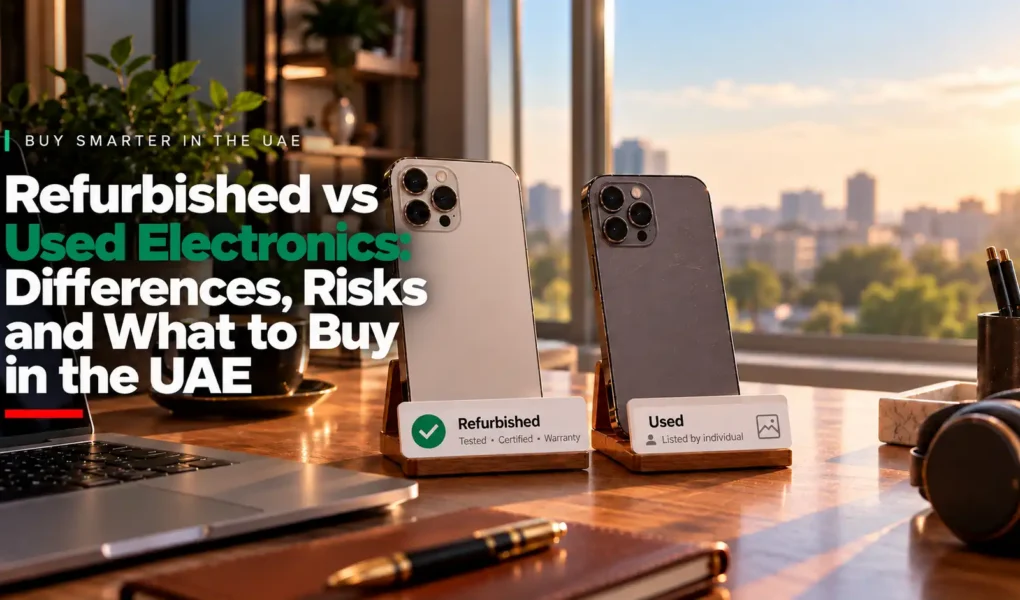
Refurbished vs used is a buying decision that affects more than the price of a phone, laptop, or tablet. Two devices can look identical in an online listing yet differ in repair history, battery condition, testing, and protection if something fails after purchase.
Across Dubai, Abu Dhabi, Sharjah, and the wider UAE, buyers can choose from electronics shops, online marketplaces, and private classified listings.
The short answer: Refurbished electronics have normally been inspected and tested for resale, with faults repaired where necessary. Used electronics have had a previous owner but might not have undergone that process. A properly checked used device can still be better value than a poorly refurbished one.
What Does Refurbished Mean for Electronics?
A refurbished product is a device prepared for resale following a return, previous ownership, business deployment, or display use. The process can include diagnostic checks, cleaning, software restoration, repairs, replacement parts and functional testing.

The exact refurbishment standard varies. One technician might replace a faulty charging port while retaining the original screen and battery. Another seller might test a fully working device without changing any components. Neither approach automatically means the product is equivalent to new.
This distinction matters when searching for refurbished electronics. A genuine description should explain what work was completed and what condition the buyer can expect. Ask who performed the inspection, which parts were replaced, and whether the results were recorded. For more information about buying refurbished devices in the UAE, read our refurbished electronics guide.
What Is a Used or Second-Hand Device?
A used device has belonged to someone else, whether it was operated for a few weeks or several years. The seller might be a private owner, a retailer, or a business replacing its equipment.
Some second-hand products are carefully inspected and include a warranty. Others are offered in their current condition, with little information beyond a few photographs. The difference between refurbished and used is therefore usually the documented preparation for resale, not a guaranteed difference in age, appearance or remaining lifespan.
When comparing smartphones, Shozon’s mobile phones and tablets listings can help you review asking prices for the same model. Check each seller’s description and ask about battery health and repairs before treating two offers as equivalent.
Refurbished vs Used Electronics: Key Differences at a Glance
| Buying factor | Refurbished electronics | Used electronics |
| Inspection | Usually tested to a seller-defined standard | May receive basic checks or none |
| Repairs | Identified defects may be corrected | Repairs are not necessarily completed |
| Appearance | Often assigned a cosmetic grade | Depends on wear and the listing |
| Battery | May have a tested or replaced battery | Health needs independent verification |
| Warranty | Frequently offered, with varying exclusions | Sometimes available, especially from shops |
| Returns | Often specified by the retailer | Can be limited in a private transaction |
| Price | Usually includes a premium for preparation | Often lower for comparable specifications |
| Main uncertainty | What the refurbishment actually covered | Previous use and undisclosed faults |
The comparison describes common selling practices, not universal promises. Some retailers sell used goods with extensive testing, while some listings marked refurbished offer very little documentation. Always compare the exact terms.
How Are Refurbished Electronics Tested and Graded?
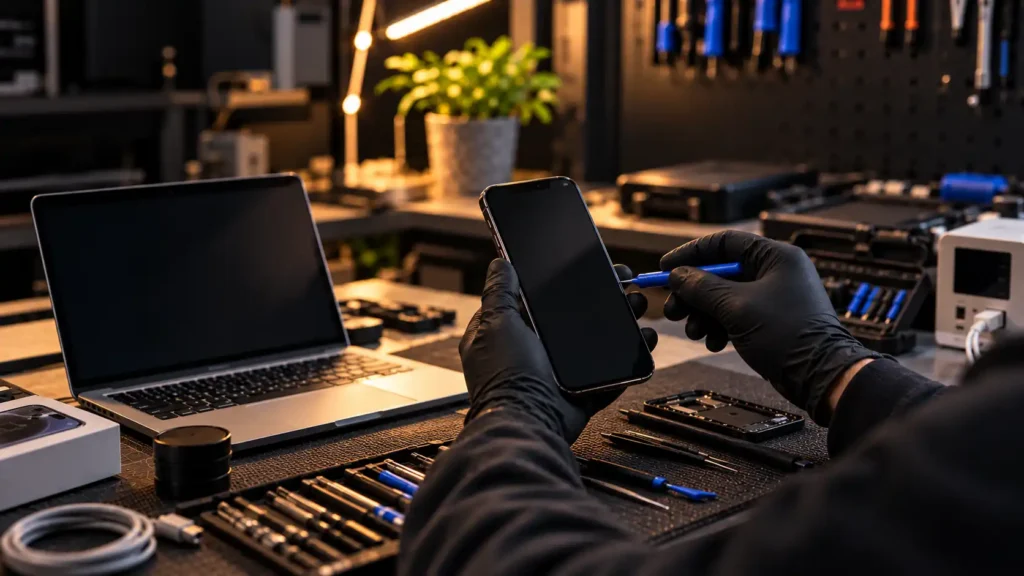
A reliable refurbishment process involves inspecting the device, repairing faults, cleaning, and final testing.
Smartphones are checked for screen, camera, audio, charging, and connectivity issues, while laptops require additional checks of storage, keyboard, cooling, and battery health. Testing cannot guarantee future reliability.
Apply similar checks when reviewing products in Shozon’s electronics listings, including checks for dead pixels on televisions, sound quality on headphones and sensor accuracy on wearables.
1. What Do Grade A, B and C Actually Mean?
Grades A, B and C generally describe a device’s cosmetic condition rather than its performance. However, grading standards vary between sellers, so the same grade may represent different levels of wear.
Request a clear description of each grade, including permitted screen scratches, casing marks, and dents. Confirm that cosmetic imperfections do not affect functionality, and ask for photographs of the actual device rather than generic product images.
2. Does Refurbished Mean All Parts Are Original?
No. Refurbished devices may contain replacement batteries, screens, keyboards, or other components. These replacements are not necessarily a concern if they are compatible, correctly installed, and disclosed by the seller.
On supported iPhone models, Settings > General > About > Parts and Service History may display information about previous repairs. The information available depends on the model and iOS version. Request repair records when the seller reports that major components have been replaced.
Is Refurbished Better Than Used for Long-Term Reliability?
The question “Is refurbished better than used?” has no universal answer.
Documented testing and sensible warranty terms reduce uncertainty, but the age of the device, quality of repairs, and remaining software support are equally important.
For work or study, reliability may be worth paying more for. A laptop that fails during an assignment or an essential business task can cost more in lost time than the original saving. Conversely, a lightly used device with its purchase receipt and a healthy battery may be a sound purchase without refurbishment.
Compare the individual products, not merely their categories. Require evidence of condition and a realistic route for resolving problems.
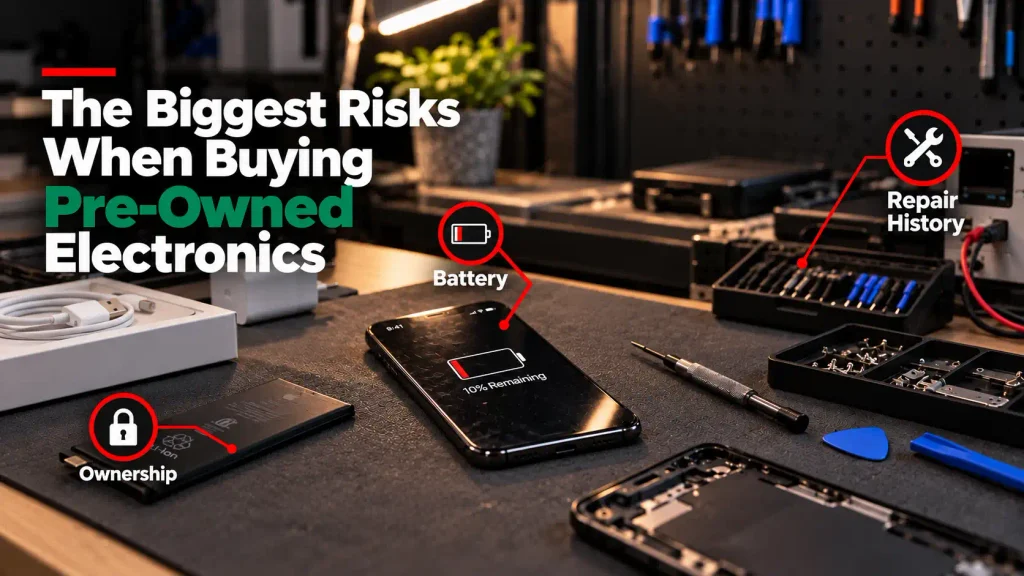
What Are the Biggest Risks When Buying Pre-Owned Electronics?
1. Battery and Physical Condition:
Batteries lose capacity over time, particularly with prolonged heat exposure in the UAE. Check battery health and watch for swelling, corrosion, damaged ports, or overheating. These defects may indicate safety risks.
2. Ownership and Software Security:
Ensure phones are free from Activation Lock or previous owner accounts, and laptops have no organisational restrictions. Verify that the device still receives security updates before purchasing.
3. Repair History and Specifications:
Check for undisclosed repairs, especially replacement screens or charging ports. Verify the processor, memory, and storage directly through the device settings rather than relying solely on the seller’s description.
How Do Warranties, Returns and UAE Consumer Rights Compare?
A warranty and a return policy protect against different problems. A warranty sets out obligations for covered faults. A return policy explains when and how a buyer can send a product back. Neither should be assumed solely from the word refurbished.
For refurbished vs used purchases through UAE businesses, ask for terms covering the warranty duration, battery exclusions, repair arrangements, return window, and who pays transport costs. Check whether a refund or replacement is possible if the device does not match its description.
Article 7 of the UAE’s Cabinet Resolution No. 66 of 2023 requires providers offering used or refurbished goods to clearly disclose their condition and record it in the contract or invoice. The rules do not create a single universal warranty duration for every pre-owned gadget.
Keep the receipt, listing screenshots, serial number, and written promises. If a dispute concerns a retailer licensed by Dubai’s Department of Economy and Tourism, the Consumer Rights complaint service may provide an official route. Private individual sales and businesses in other emirates require a separate assessment of the appropriate remedy.
Is Buying Used Really Cheaper After Repairs and Accessories?
The asking price is only the starting point. Compare the total amount needed to make each device suitable for use, including immediate repairs, a compatible charger, and any necessary accessories.
Here is an illustrative comparison rather than a current UAE market quotation:
| Cost item | Refurbished laptop | Used laptop |
| Purchase price | AED 1,500 | AED 1,200 |
| Battery replacement, if needed | AED 0 | AED 250 |
| Missing suitable charger | AED 0 | AED 100 |
| Illustrative total | AED 1,500 | AED 1,550 |
In this example, the cheaper listing ends up costing AED 50 more. If the used laptop already has a sound battery and charger, the calculation changes. Repair quotations, component availability, and warranty coverage should be checked before drawing conclusions.
For refurbished vs used price comparisons, check the model year, processor, memory, storage, display specifications, and included accessories when comparing laptops or desktops in Shozon’s computers and networking category.
A practical rule is to set a maximum all-in budget before contacting sellers. Keep some of it available for an unexpected battery or charger expense, particularly with older devices.
What Should UAE Buyers Check About Imported Electronics?
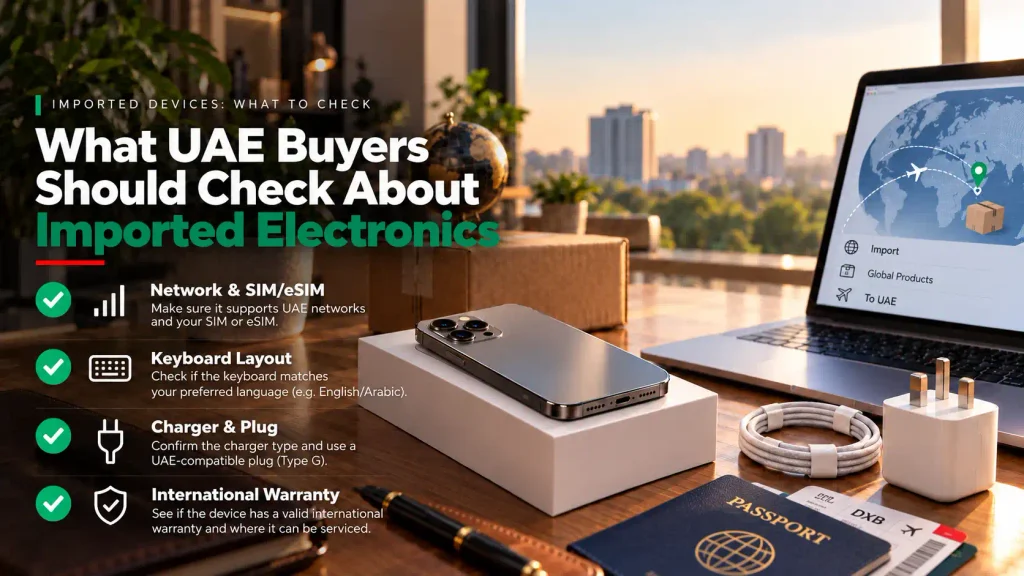
Phones sold in the UAE may have originally been intended for another region. Verify the exact model number, mobile network compatibility, SIM or eSIM requirements, and any carrier restrictions before making an offer. The UAE’s TDRA equipment approval system governs telecommunications equipment offered in the local market.
For laptops, confirm the keyboard layout, charger rating, plug compatibility, and availability of local servicing. An overseas warranty may be difficult to claim through a UAE repair centre, even when the original warranty period has not ended.
The refurbished vs used description alone cannot tell you whether an imported device meets your needs. Ask the seller for its regional variant and clarify delivery charges and return-shipping arrangements when buying online.
How to Inspect a Phone, Laptop or Tablet Before Buying
Use this refurbished electronics buying guide to check each device before you pay. Where possible, inspect the actual product in person.
1. Check its identity
Match the exact model, storage, and available identifiers to the listing and paperwork. Do not publish full serial numbers in public messages.
2. Inspect the exterior
Examine the screen, frame, hinges, ports, cameras, and screws. Look for cracks, corrosion, swelling, or gaps suggesting poor reassembly.
3. Test everyday functions
Make a call, use Wi-Fi, record audio and video, test touchscreen response, and check charging. On a laptop, test the keyboard, trackpad, webcam, speakers, and USB ports.
4. Assess the battery
Review available capacity or cycle information and look for unexpected shutdowns. A percentage alone cannot guarantee runtime.
5. Check accounts and restrictions
Confirm the device can be erased and activated without a previous owner’s credentials or business management lock.
6. Verify software support
Check that the device can receive suitable security updates and run the applications you need.
7. Review the transaction
Confirm accessories, disclosed faults, warranty conditions, return policy, and final AED price in writing.
When inspecting a second-hand iPhone, follow a used iPhone checklist covering Activation Lock, IMEI, battery health and parts history.
What Should You Do When Buying Electronics Online?
Ask for recent photographs of the actual device, including its powered-on screen and any faults. A short unedited video can demonstrate functions, but cannot replace an in-person inspection.
Never treat a courier label, payment screenshot, or seller’s urgent deadline as proof of a legitimate transaction. Use safer payment methods and handover arrangements you can verify. If a seller refuses reasonable checks, move to another listing.
Where Can You Compare Electronics Listings in the UAE?
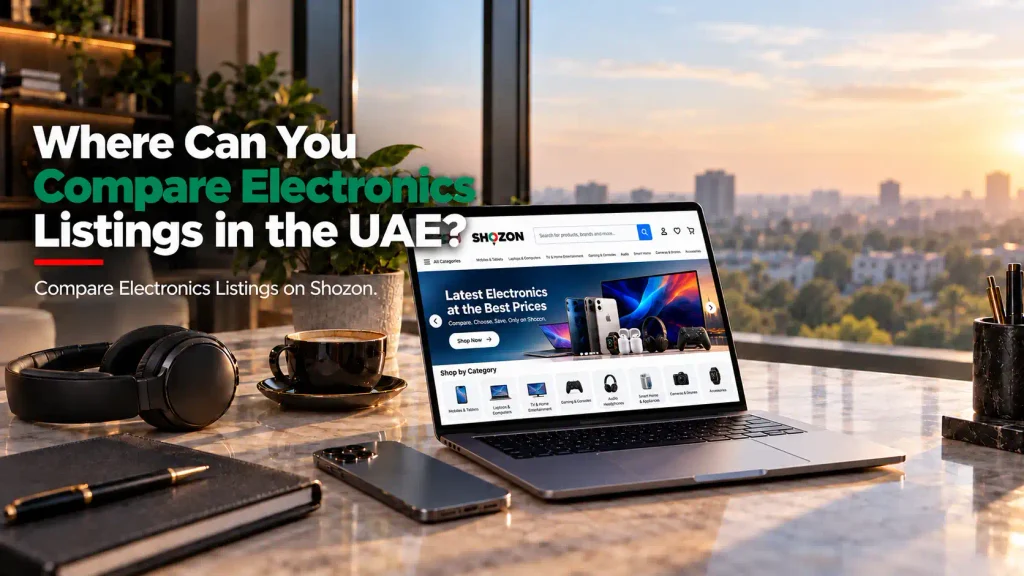
Shozon’s classified categories can help you compare specifications, asking prices, and stated condition across different listings. Select the category that matches your device first, then compare identical models and specifications rather than products that only look similar.
For a fair comparison, note the device’s age, included accessories, disclosed repairs, and whether any seller-backed protection is offered. A lower price on an older variant with less storage may not represent better value.
Use relevant price, condition, age and warranty filters where available. Compare several like-for-like adverts, then ask the seller to substantiate any claim that a product has been refurbished or tested. A marketplace listing does not itself certify a device’s condition.
When comparing in Dubai, Abu Dhabi or Sharjah, also consider how far you would need to travel to inspect or return the item. A small discount may disappear once delivery, transport, and possible follow-up visits are included.
Refurbished vs Second Hand: Which Option Should You Buy?
Choose refurbished when you need the device every day, cannot easily absorb downtime, and have found a seller with credible tests, clear condition grading, and written warranty coverage.
Choose used when you can inspect it fully, verify legitimate ownership, and accept the additional uncertainty in exchange for a meaningful saving. A known device history and remaining transferable warranty can improve the offer.
Choose new if an older model lacks necessary updates, if the saving is too small to justify the risk, or if you require a particular manufacturer’s complete new-product coverage.
Compare each offer on purchase price, battery condition, software support, testing evidence and after-sales assistance. Reject devices with unresolved safety or ownership problems, regardless of price.
Are Refurbished and Used Electronics Better for the Environment?
Keeping a functional device in service can delay replacement and reduce demand for new manufacturing. Both refurbishment and ordinary second-hand resale support reuse, although their environmental impact depends on the repairs performed, transport, and how much extra life the device gains.
Buying an obsolete device that soon requires replacement may deliver less benefit than selecting one with years of useful software support. The environmental benefits vary depending on the device’s remaining lifespan, repair requirements, and the resources needed to keep it in use.
What Is the Best Way to Choose Between Refurbished and Used?
The better option depends on verified condition, total cost and after-sales protection. Documented testing and warranty coverage can justify a higher refurbished price, while a well-maintained used device may offer better value.
Start with comparable specifications, verify ownership and safety, and agree on the exact terms before paying. An attractive asking price should never outweigh a device you cannot activate, a hazardous battery, or a seller who refuses reasonable questions.
Frequently Asked Questions About Refurbished and Used Electronics
What is the difference between second-hand and refurbished?
Refurbished devices are usually inspected and tested, with repairs when needed, while second-hand devices may be sold without professional checks.
Is it better to buy refurbished or used?
Refurbished devices may offer greater peace of mind when testing and warranty coverage are documented, while used devices can provide better value if their condition is verified.
Is it safe to buy a refurbished product?
It can be safe if the device has been properly tested, has no ownership restrictions, and comes with clear warranty and return terms.
What is the disadvantage of refurbished?
Refurbished devices may contain replacement parts, show cosmetic wear, or have shorter warranty coverage than new products.
Why is refurbished so cheap?
Refurbished electronics usually cost less because they were previously owned, returned, or displayed rather than sold as brand-new.
Do refurbished phones have original parts?
Not always. Refurbished phones may contain original components or compatible replacement parts, depending on their repair history.
Do refurbished iPhones have 100% battery health?
No. Battery health varies by device, and a refurbished iPhone does not automatically have a new battery or 100% battery health.
How long do refurbished phones last?
Their lifespan depends on battery condition, device age, repair quality, usage, and remaining software support.
Where is the safest place to buy a refurbished phone?
Choose a reputable retailer that provides documented testing, clear warranty terms, a return policy, and proof of purchase.
Should I buy a new or refurbished phone?
Choose refurbished for potential savings with verified quality, or new for an unused device with full manufacturer warranty coverage.
References
Apple Support — iPhone Parts and Service History
https://support.apple.com/en-ie/102658
Microsoft Support — Caring for Your Battery in Windows
Apple Support — Buying a Pre-Owned iPhone
https://support.apple.com/en-gb/104999
UAE Ministry of Economy — Cabinet Decision No. 66 of 2023
Dubai Consumer Rights — Consumer Complaints
https://consumerrights.gov.ae/en/submit-a-complaint/consumer-complaints
TDRA — Register and Approve Telecommunication Equipment
https://tdra.gov.ae/en/services/equipment-registration
National Cyber Security Centre — Buying and Selling Second-Hand Devices
https://www.ncsc.gov.uk/guidance/buying-selling-second-hand-devices
Federal Trade Commission — Buying From an Online Marketplace
https://consumer.ftc.gov/articles/buying-online-marketplace
US Environmental Protection Agency — Electronics Basic Information and Research